Showing posts with label setting. Show all posts

Thursday, April 21, 2022

Doing Research: the Tampa Bay Hotel

When Gwen Mayo and I work on the latest Three Snowbirds novel, we try to visit the sites that the ladies visit. Our next book, Ybor City Blues, is set in Tampa and Ybor City (Ybor City is part of Tampa now, but was a separate town in the 1920s).  

During their time in Tampa, Professor Pettijohn, Cornelia, and Teddy will be staying in the Tampa Bay Hotel, opened by rail baron Henry B. Plant in 1891. 


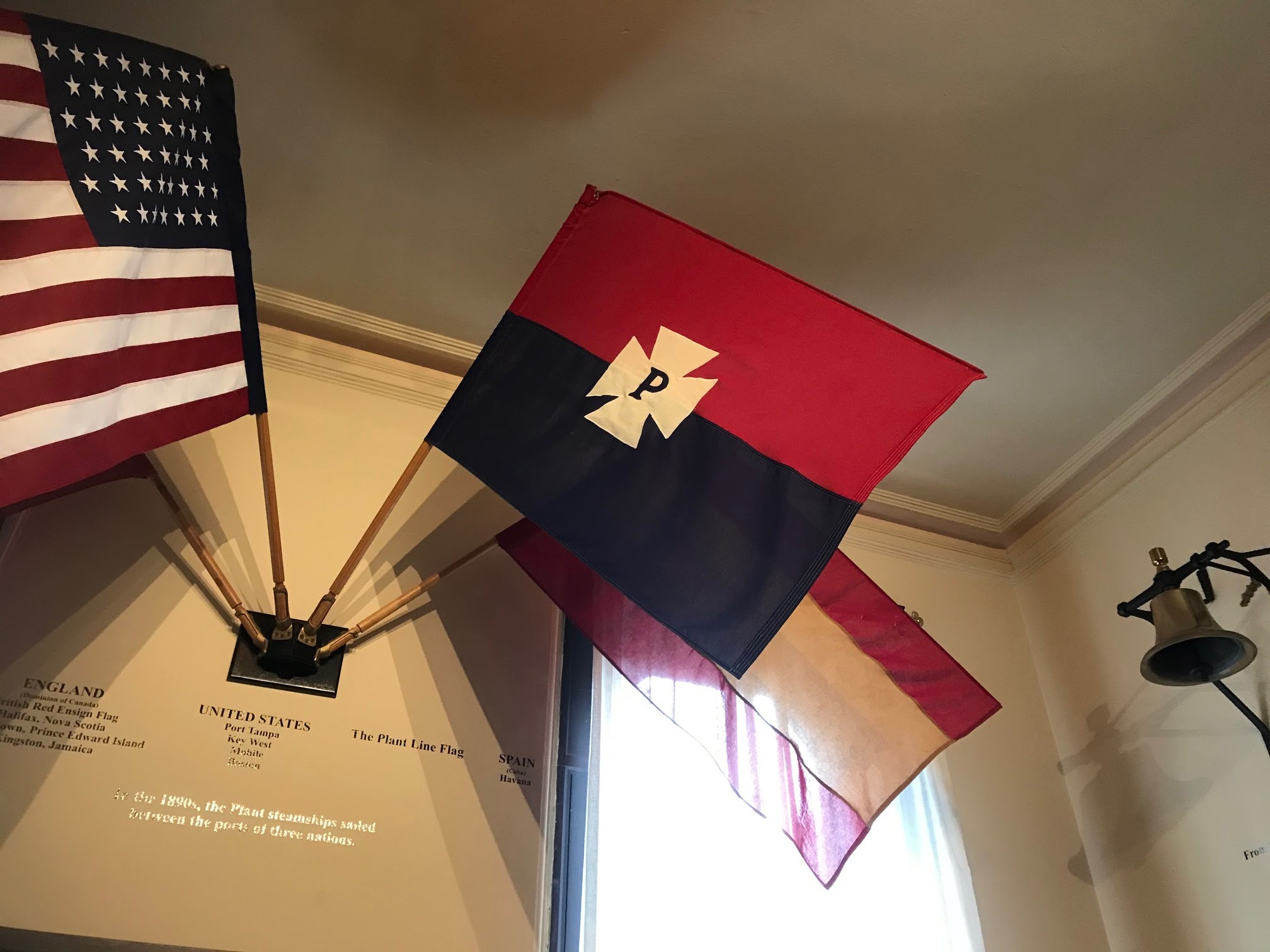
This hotel was one of eight built by Henry Plant along his rail lines to promote tourism. It had over five hundred rooms and was the place to be during the Gilded Age. Guests could enjoy the golf course, casino, stables, indoor heated swimming pool, and even a race track situated on the grounds. It even had its own flag!

Naturally, we paid special attention to the details of the guest and dining rooms, since our characters will be seeing a lot of them. 

A comfy place to sleep.

Table setting from the original dining room.
The hotel had its own silverware and dishes.

For entertainment on Sunday, Col. Harold B. Bachman's "Million-Dollar Band" provided music for the guests in the bandshell at Plant Park. They performed at the Park during the 1925-1927 winter seasons, often attracting crowds in the thousands. We plan to have some fun in this setting.

Why yes, that IS a cutout of Bachman!

I'm afraid that by the time of our book, the hotel was in its last decade of service. The family sold the hotel to the city of Tampa in 1905, a few years after Henry Plant died, and the city closed the hotel in 1930. The Tampa Bay Junior College moved into the space, but part of the hotel reopened as a museum in 1933, which is still open for touring. The rest of the hotel houses offices for the University of Tampa.

You can learn more about the Tampa Bay Hotel from Gwen Mayo's post, The Magic Kingdom of Henry Plant.

Monday, March 28, 2022

The Three Snowbirds: Why Homosassa?

In Murder on the Mullet Express, our three snowbirds head to Homosassa, Florida as their first stop. The characters’ motives for this destination become clear (to the detriment of Uncle Percival), but someone unfamiliar with Homosassa might wonder why we set a story there in the first place, especially in the 1920s. 

Homosassa and Homosassa Springs are two communities divided by U.S. 19 in Citrus County, a fairly rural area. Today, it’s best known for its manatees and Monkey Island. We visited Ellie Schiller Park more than once, which has a timeline of Homosassa’s history. The Yulee Sugar Mill and Tiger Tail Island were interesting, but we found ourselves drawn to the tale of a Florida Land Boom project.

In the 1920s, the West Coast Development Company bought up a large amount of property in the area around Old Homosassa on the cheap, with an eye to reselling it as a planned community. I read the brochure from the newly-formed Chamber of Commerce, and they essentially said they were building the Biblical shining city on a hill (in a place with very few hills and fewer people). Eden might be a more accurate term; the area was overflowing with fish, game, and waterfowl. 

The proposal generated a lot of interest, but getting the customers to the property was a challenge: due to the enormous number of would-be entrepreneurs, Florida railroads had put an embargo on passengers. Not to be daunted, West Coast arranged for potential investors to arrive in Jacksonville, where they would be driven across the state in the luxurious new Cadillacs. Immediately, our minds went into gear: imagine the locked-room mystery one could set in a private car during a lengthy ride!

Unfortunately, that sort of puzzle works best in short form, not a novel. Plus, it wouldn’t really involve Homosassa. A deadly ride might turn up in a future story, though.

So, back to the proposed city. Sales of premeasured lots began in early 1926. The speculators who arrived first were, for the most part, not interested in living there themselves. They were there to buy property that they could then resell at a higher price. Eventually, it would pass into the hands of someone who did want a Florida home and was willing to pay through the nose for it. That sort of mindset leads to skullduggery, and where there’s skullduggery, there’s often murder.

The planned city included an arcade and casino. In those days, a ‘casino’ could refer to a place where people gathered for social affairs, but gambling was always a possibility. Tampa, only a few hours’ drive to the south, had a thriving gambling enterprise run by organized crime in the 1920s. To make things even better, the homegrown gang, Charlie Wall’s boys, were butting heads with mobsters who had come down from Chicago. Oh look, there’s murder again.

We drew from these elements to create our characters. Once that was done, the plot began to write itself. I hope you’ll find the results colorful and enjoyable. 


ShareThis