If you've read Kipling or other Victorian stories set in India, this novel contains some of those elements, but it gives you the bad as well as the good. An excellent murder mystery with strong characters of both nationalities and genders.
Plotline in a nutshell: Captain Sam Wyndham and Sergeant 'Surrender-not' Banerjee travel to Sambalpore to solve the murder of an Indian prince. This description, though, doesn't begin to encompass the rest of the story: our entry into a realm where exorbitant opulence and crushing poverty meet, and leaving the relative familiarity of British culture for one less so to an American reader like myself.
My employer did many things for me. I accumulated retirement again, Gwen and I had 'regular' healthcare again, and we were able to move into our own home.
The catch: my job was in the shrinking part of the company. I'm not going to get too specific here, but technology is rapidly rendering it obsolete. Some jobs were outsourced to cut down on expenses, but dwindling returns kept the demand for cuts high. The game of Musical Chairs began before my arrival, and I lasted for a long time. Yesterday, when the tune stopped playing, I lost.
I have a number of conflicting emotions about this. There's disappointment, anger, and fear for the future, but there's also a sense of relief. I've never liked Musical Chairs, for the same reason I don't like Jenga: too much stress. Someone is going to lose, and every misstep, every move you make could lead to your downfall.
William Monk has changed his profession several times since I began reading the series many, many years ago. Police detective, private detective, investigator for attorneys, etc. His position with the River Police, though, seems to have become his permanent berth. He's settled into the role, assumed the mantle of authority, and formed ties to his men, a change from the alienation he experienced in the early books. Those ties will be challenged in this novel.
Oliver Rathbone contacts Monk on behalf of Harry Exeter. His wife, Kate, has been kidnapped and is being held for ransom. Exeter is willing to pay the ransom, but it requires that he go to a very dangerous area along the river and he wants protection against robbery (en route) and double-crossing during the transfer. Monk accompanies Exeter personally and stations his men in nearby locations to try catching the kidnappers after the safe return of Kate. Instead, the double-cross does happen, and the police are ambushed in their locations.
Kate Exeter is dead, and clearly the kidnappers knew where Monk’s men were going to be. Someone has provided the information to the bad guys, and it could only be someone involved in the exchange. Monk must investigate his own men to clear or condemn them. They all have secrets, and they all have weaknesses… did one knuckle under to blackmail? Worse…bribery?
One of Monk’s men, John Hooper, often takes center stage during this novel. Like Monk, he is agonizing over the idea that they were all betrayed… and, as the secrets of his fellow officers are revealed, it becomes clear that he has one of his own, and it could cost him everything.
As Monk pursues his leads, the trail of crime enters Superintendent Runcorn’s patch. Runcorn, Monk’s old boss and former enemy, develops his own opinions on the case, which don’t always agree with Monk’s. Runcorn charges the husband with murder, and Monk, with Rathbone, work to prove Harry Exeter innocent.
The case ends with a twist I didn’t expect the author to make. It keeps the story from entirely sinking into the tawdry background of Monk’s many cases (since this is the twenty-fourth Monk novel).
I was pleased to see Monk’s men fleshed out further, even under the unpleasant circumstances, and I enjoyed Runcorn’s bold entry into the investigation. Monk’s wife, Hester, does appear in this book, though not frequently enough for my tastes. Scuff, their adopted son, is maturing nicely and has developed ambitions for his future. Beata, Oliver’s new wife, also makes a brief appearance.
Perry often ends the book shortly after revealing the killer; this is one of those occasions. I like a little more denoument, personally, but it wasn't too abrupt. It did remind me a little of a Perry Mason ending, where all is revealed on the stand.
I accessed this novel through NetGalley in exchange for an honest review.
Funding our healthcare through GoFundMe, our journalism through Patreon, and road repairs through Dominos. Everything's perfectly on track, America https://t.co/xreFmWHJ5I
A remarkable amount of fundraising is going on, and much of it is for services we normally associate with the government, or at least public money. Meanwhile, the fields that used to produce income and ad buys, like journalism and fiction writing, has been reduced to begging for sponsors.
Meanwhile, the pizza people are paving roads, because it's not getting done.
Every day is Backwards Day, it seems.
In the last year or two, I've donated to help a child get necessary surgery, to help a friend who lost her home due to a fire, to help another friend in danger of losing the family's home due to outsourcing + crappy job market, and to bury a friend whose family couldn't afford a funeral. In all these cases, I had some form of personal connection to someone involved with the need. Think of all the unpopular people out there - and the names and faces change regularly - who aren't getting help because they are introverted or belong to whichever marginalized group is in bad odor.
This is why we need public funds for assistance: because shit happens. Businesses kept the money from the recent tax cuts for buybacks of stock and consolidating power, not creating jobs so fewer Americans would need to beg. Just because it's on social media doesn't mean it's not a form of begging. Charles Dickens would understand our society very well.
It's always lovely to have Mr. Zimmer grace my page. He's a dynamo at fan conventions and his word processor. He's back with his newest book, Dream of the Navigator, and invited me to ask him the question of my choice. I've been a fan of dystopian stories since my days as a strange little girl who read science fiction, and have never quite understood why they appealed to me. It seemed perfect, then, to ask why he chose to set this novel in a dystopian world. Below is his reply.
Why Dystopia?
The sciences of today focus almost entirely on the question of whether we can create and start using a given technology rather than whether we should create and use a given technology. New technologies are integrated, and new policies are enacted all the time in our world without a lot of thought for the potential consequences of those decisions.
In my view, dystopian literature is a genre that is well-suited for exploring consequences. Obviously, dystopian settings are already well-immersed within the consequences of earlier decisions, some made ages before the time in which a story takes place.
Consider the Capital in The Hunger Games series. Its authoritarian rule was an end result that likely a great many did not foresee when it was in its formative phases. Likewise, it is pretty reasonable to say that not everyone in earlier times could foresee the imposition of Big Brother and the totalitarian atmosphere in place that is portrayed in the novel 1984.
These worlds did not come into being overnight. They were the result of a progression over a long period time, step by step, leading to the nightmarish dystopias that we read about in the pages of those books.
The environment where the main characters in Dream of the Navigator live is most certainly an authoritarian/totalitarian one. The system is solidly in place, but readers will get a sense of the path that led to it by the time they are finished with the book.
The control of the populace involves the use of both dystopian and utopian ones, in terms of negative and positive reinforcement.
On the dystopian side of things, the pervasive surveillance system exacts immediate penalties for various infractions committed by citizens. It also sweeps up any who are expressing dissent to others or speaking out against the system, taking transgressors to indoctrination centers or even prisons, depending on the level of the dissent displayed.
As far as utopian elements used to maintain control, the system’s primary tool is escapism. Virtual Reality is the most popular form of escapism, but other forms of entertainment are prominent, such as spectator sports and live music (though it should be noted that many “attend” sporting events and live music through the VR technology rather than physically being present).
Even though surveillance is everywhere, an underground of substance abuse is still present in society, which serves as a clue that it is something tacitly allowed by the system.
While being addicted to virtual worlds, entertainment, or substances are not good for any individual, they are all pleasurable things, and as such fall into a more utopian classification when it comes to elements.
The combination of pleasurable, utopian elements with heavy-handed dystopian ones is a powerful one when it comes to subduing a society and keeping it under control. Yet the iron fist that the system wields is always present, which is why the entirety of the technate-based system in Dream of the Navigator lands it comfortably within the realm of dystopian literature.
Dream of the Navigator is an exploration of choices and the consequences that these choices have many years later, even decades later. The dystopian genre gives me fertile ground as a writer to illustrate in a vivid way the dangers of some choices, to the extent that a story like this can serve as a kind of warning of what can happen if we are not careful.
This is why I found dystopia the best atmosphere for the telling of the story contained within the pages of the Faraway Saga.
Thank you, Mr. Zimmer! - Sarah
Dream of the Navigator Blog Tour
August 15-22, 2018
"1984 and Brave New World meets Narnia" in this exciting new young adult release from award-wining author Stephen Zimmer. Four main characters begin their journeys in the Faraway Saga, a tale that invites readers to explore infinite horizons!
We are celebrating this new release with a full blog tour featuring reviews, interviews, video contents, guest posts and top ten lists!
About the author: Stephen Zimmer is an award-winning author and filmmaker based out of Lexington Kentucky. His works include the Rayden Valkyrie novels and novellas(Sword and Sorcery), the Rising Dawn Saga (Cross Genre), the Fires in Eden Series (Epic Fantasy), the Hellscapes short story collections (Horror), the Chronicles of Ave short story collections (Fantasy), the Harvey and Solomon Tales (Steampunk), the Ragnar Stormbringer Tales (Sword and Sorcery), and the forthcoming Faraway Saga (YA Dystopian/Cross-Genre).
Stephen’s visual work includes the feature film Shadows Light, shorts films such as The Sirens and Swordbearer, and the forthcoming Rayden Valkyrie: Saga of a Lionheart TV Pilot.
Stephen is a proud Kentucky Colonel who also enjoys the realms of music, martial arts, good bourbons, and spending time with family.
Book Synopsis for Dream of the Navigator: "1984 and Brave New World meets Narnia"
Cities have been replaced by technates. It is a world of soaring apartments, hundreds of stories high, where technology measures, monitors and rations to meet the needs of the greater populace. It is a world of drones, in the air and on the ground, and advanced robotic beings who carry out much of the harder labor, security, and even pleasure assignments.
Those discontent, or who resist, are taken to Rehabilitation Centers, established after the embrace of the Greater Good Doctrine.
For most, virtual realms, substances, and entertainment provide escapes, but for Haven, Cayden, Jaelynn, and Salvador, growing up in Technate 6 is a restless existence.
A hunger for something more gnaws inside each of them. Discoveries await that open the gates to transcend time and space, and even new planes of existence. Nothing in their universe, or others, is impossible to explore.
What was once reality, now seems like an illusion in a deepening experience.
Begin the journey to Faraway, in Dream of the Navigator, the first book of the Faraway Saga!
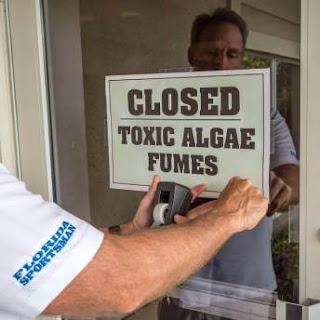
Action must be taken to stop the poisonous discharges from Lake Okeechobee into the Caloosahatchee and St. Lucie Rivers. The red tide that kills fish and causes lung problems for people near the ocean has become an overwhelming summer problem in Florida. Elected state officials, including our governor, assign blame to the federal government. Elected officials in the federal government assign blame to Florida’s elected officials; the floodwaters from Lake O must go somewhere, or endanger the area around the lake. There’s plenty of blame to go around.
For years, there’s been a proposed Agricultural Area Reservoir to assist the Comprehensive Everglades Restoration Plan, which would direct more water south into the Everglades and Florida Bay, and rid the water of pollutants as well. The plans for this reservoir have been batted back and forth for at least a decade, but the Florida legislature has dragged its heels on actually building the thing. Acres keep getting removed from the plan and nothing’s being done.
Well, that’s not 100% correct. Florida has a ‘business-friendly’ government—the sort that has reduced the lunch ‘hour’ to 30 minutes and has made temp work a way of life. It also posts warnings to individual citizens about not using fertilizer, while allowing agribusiness to dump ‘nutrients’ (i.e. runoff) into Lake O. One rule for citizens, another rule for donors. The wildlife in the ocean doesn’t matter to some business owners nearly as much as the bottom line, and the same goes for the rivers and the people who live next to it. It’s a shame, but campaigns cost money.
From the Florida Phoenix.
Then, there’s our ‘business-friendly’ federal government, which has spent the last couple of decades gutting the Clean Water Act. No teeth at the federal level, permissiveness at the local level. We know that the fish don’t matter. The manatees don’t matter. And a few lawsuits from wheezing citizens aren’t going to hurt the bottom line of political donors by much. So, the ‘nutrients’ pour into the lake, making it toxic. And when the rainy season comes, that water needs to go into the ocean. It’s deep and will eventually break up the pollutants, right?
But how business-friendly is it when dead fish litter the shore and the algae blooms are so toxic that it creates lung problems for the citizens – and, more importantly to our state officials, the tourists and retirees who buy those million-dollar condos? Hotels are losing customers, and real estate deals are falling through. Who wants to live near a stinky shore that makes you cough?
We’re coming up on election time, though. Our Esteemed Governor, running for the U.S. Senate, declares now that he has asked the government to ‘expedite’ the development of the reservoir. Lip service is being paid to the sad situation on both coasts by the Florida Legislature. These are often the same officials taking donations from Big Sugar and the same people that didn’t want to use the money from 2014’s Amendment 1 for its earmarked purpose – conservation.
It’s far past time to buy the land and clean the lake. It’s far past time to identify and support lawmakers that want to resolve this crisis (of all parties), and replace the ones that helped create it (Rick Scott is not a friend to the ocean). That’s what’s business-friendly.
Before we go any further, let me tell you that yes, I’ve seen someone for it. So put your mind at ease on that front. Some people suffer in silence, but I’m not one of them. If you don’t need to hear grumbling and whining, go elsewhere. I’ll understand; this is a depressing time in history.
Since the upending of my life in 2012 and the death of my father, I’ve been in a darker place. An emotional place where fewer people have my back, and a physical place where the living is uneasy. Shortly after the funeral, I became a liability and expense, leading to anger and behavior which I think less of myself for exhibiting. Moving saved my sanity, but I may have to return because, again, I am needed. Sadly, the trust is gone.
In the working world here, experience and age are liabilities. I was advised to leave jobs off my resume by temp agencies to conceal my age. A prospective employer told me that they could hire a temp to do a job that I knew, from working in a similar office in Kentucky, required specialized training and pulled down $40K as a starting salary. Businesses hire temps at low wages in Florida instead of ‘regular’ workers, and the cost of living where the jobs are located is very high. My wife and I both have long commutes and are frequently tired, plus I live in constant fear that my position will be offshored.
Then, there's just plain old depression. Based on my family history, I think I come by it honestly. Depression is an open wound, always bleeding, giving you surprise flashes of pain like the 'jump' shocks of a horror film. Even when I've been the happiest, I can't say I've ever experienced unalloyed joy.
So, I’ve been chugging along, doing my day job and paying my bills, but that’s all I have energy for most days. There have been bright points, like publishing anthologies and releasing the first novel of a series co-written with my wife, but the number of “What’s the use?” thoughts to overcome has been ridiculous.
Besides the “seeing someone” business I mentioned above, I’ve also used affirmations, visualizing my goals, etc. to improve my mood. I’ve discovered that it’s very hard for me to even picture success any more, or to believe that I’m still capable – or worthy – of attaining it. Once you’ve seen an ugly person in the mirror, it’s hard to forget or forgive.
I must keep trying to climb out of the hole, though, even if I have so much more to regret at 50+ than I did at thirty. If you're depressed, you must keep trying, too.
I mentioned some time back that we moved into a gated community with an HOA. Overall, it's a nice place, so I will not name it here. Unfortunately, it has appearance 'standards' we must maintain. This is a bit challenging, since we have enough trouble finding energy and time at home to maintain the interior (think dishes, laundry, etc.).
Anyway, we got one of the letters from the HOA. We need to clean the outside of our mobile palace. I suppose it's to be expected, since the people around us are very anal-retentive about their own properties, but I think it should be illegal to demand this sort of outside labor in Florida in late June.
So far, we have learned the following about cleaning the exterior of a mobile home:
Use a pressure washer. It's faster and more effective. Way more effective. I would use it to remove my freckles, but I think it would take the rest of the skin off, too.
Use something with bleach. Fuck the vegetation. If it worries you, remind yourself that it's going to get diluted fast when you turn the pressure washer on it.
Wear glasses or safety goggles. Also, be careful when edging a pathway with a pressure washer. There's blowback. Never mind how I know this.
Dawn works better at removing grime than laundry detergent does.
Your neighbors, the ones you thought were anal-retentive, will come and ask if you got a letter from the HOA, too.
The aftercare for this endeavor involves cortisone, Benadryl, and Advil. Lots of Advil. But at least we can see the original color of our awnings again.
Update! I just got a friend request from someone with pics that advertised the 2010 Census. They also showed him with bumper stickers implying that he was running for office. I researched the name and discovered that the real guy was sentenced to prison earlier this year. Yes, the pictures match. Either he's looking for a prison pen pal, or someone's spoofing him.
This guide is primarily for women, although gay guys might get some of these invites, too. Men, if you have your own list, feel free to comment.
The past year has brought a flood of friend invites from Facebook IDs of unknown provenance and questionable intentions. Many are from phishers, catfishes, and scam artists. They can also come from exes and the stalkerish set, but no one seems interested in stalking a fat middle-aged lesbian of modest income.
Some of the 'tells' of a fake Facebook ID:
Timeline has a few posts, period, and there are no friends or interests listed. Person is at least an 8 and you are a 5 or lower.
Profile photo is of Hugh Jackman, and profile name is Hugh Jackman. Yes, I got this.
Profile and name are of someone you are already friends with. Every once in a while, someone needs to create a new ID, but try contacting your friend first to be sure.
USA military and widowed. Logic would suggest that the soldiers have a more dangerous lifestyle than their wives, but not with this bunch. Bonus points if the uniform displays a different name than the Facebook name, or is of foreign origin.
Name is Western but consists of two first names, or surname used as first name. I've seen it happen in real life, but it's not common. Reveals a poor grasp of western naming conventions.
Picture is of lily white guy "from Texas" (a favorite state-don't ask me why), but celebrity and sports favorites are Nigerian or Ghanaian. I understand Macedonia is also popular.
Divorced or widowed guy was born in Texas, educated in Europe, and now works "in oil" in the UAE. Listed here because I've seen this several times. I guess this is to reel in gold-diggers. Hmm.
Divorced or widowed guy was born in London, educated in Europe, lives in Texas, claims to be a physician but writes posts like "I lov music,i like siging.All my frid has gon to de stidio,but i dose not,just becaze of money money". Student debt is a killer, I guess.
Picture is of gorgeous African-American man holding a rose, all posts contain romantic lines or praise The Lord. All his friends are women. Real or fake, he's going to break your heart.
If you do friend someone and aren't sure after the fact, use some of the standard cautions for the Internet: don't click on any links they send you, give them your personal information, and Google anything that sounds like a scam for money. Also: take another look at their profile to see if any new red flags appear. Real people usually have a lengthy timeline with less-than-relevant content, and tend to like at least one thing you don't. If the cupboard is bare, tread carefully.
Disclosure: I received an advance copy on Netgalley.
In this collection, Batwoman seeks to stop someone who is supplying illegal weapons to the black market, with the stated goal of killing people from as many different nations as possible. Our intrepid heroine follows the trail in her private yacht until it leads to a place she knows well.
This story is more James Bond than superhero. It's also more Harlequin than Harley Quinn.
The art, done by multiple artists, is beautiful. When she wears her costume and her cowl with the long hair, the art reminds me very much of John Romita, Sr. When you see her out of costume, the art is more Sal Buscema. And if you're familiar with those artists, you get an idea of my age and comic-reading background. The action is good, with rough-and-tumble combat that doesn't hold back due to gender. It brought back the best of my memories and granted me a story with a woman in the lead.
The storyline is good. Katherine Kane is every bit the millionaire playgirl that Bruce Wayne is. Unlike Bruce, she tried to serve her country in the military and was tossed out of West Point for being a lesbian during the bad old days. Afterwards, she became a socialite drunkard who was saved by The Batman from leading a useless life. As Batwoman, she traces the bad guys and gals to Coryana, an island of outlaws... and must face her own past.
You will sense a 'but' coming here. If you are worried about spoilers, this might count... but it's not a surprise to the heroine.
This graphic novel involves a lesbian hero, and I believe it was primarily aimed at lesbians. The majority of lesbian fiction I've seen have been romances, and The Many Arms of Death wanders into this category, too. The leading antagonists and allies are all female, and the majority are either former lovers or romantic rivals of Katherine Kane. While romance comics used to be popular, too, this is a little too insular for me. I want to see lesbians interacting with the 'regular' world of comic books, like Maggie Sawyer of Metropolis SCU. Your opinion may be different.
I award this story four stars because I think it's a good storyline, well-executed, and has great art. I would recommend it to those friends who would appreciate it.
As NaNoWriMo prepares to launch again, the usual debate has begun over how long it 'should' take to write a 'real' novel. I will leave the definition of a 'real' novel to more intelligent minds, since many critics believe that genre novels aren't 'real' books, and I believe that many modern 'literary' novels are merely set in a 'literary' location (New York, the antebellum South, a war-torn country) and have an unhappy ending.
Let's agree that a novel is a story, and that it substantially longer than six words. How long does it take to write a novel? It takes as much time as it needs to finish the story. Some authors can write several books each year, especially if their income depends on it. Stephen King regularly produces enormous books and include 100+ page novellas in his short story collections. Other authors take years to complete books, especially if life (or rehab) gets in the way. Then there's the unfinished "trunk novel" that was put away in a different decade because the writer realized that it was turning out to be a different story than the one she'd thought, and the ending hasn't come to her yet (no names, please).
Writing a story is a noble undertaking. You may never finish it, you may write like crap, you may use the word "really" fifty-two times in the first chapter, you may start off with a weather report and your more hip friends will tell you why that's 'wrong'. But you have begun something that is an extension of you in some way, yet has a life of its own.
You may think that 'inform' merely means to give data to someone else, but it can also mean to give principles or a defining quality to something else, whether it be something written or a way of living. You inform your story via who you are; that's why Travis McGee and Hercule Poirot are so very different. It's why Harry Potter and the Sorcerer's Stone isn't like A Wizard of Earthsea.
Stories also inform your own life. If you've been told you were "the good son" through childhood (a loaded phrase), you are unlikely to embezzle funds from the family business and take off for Cabo with your au pair. If you see yourself as a geek girl, you will join every fandom under the sun and sneer at reality TV. If you tell yourself you are a writer, you will write a tale - and if you tell yourself that you are a good writer, you will finish that story after November if it's not done, and you will review your manuscript to remove those repeated words.
Are you ready to go?
About the author: Stephen Zimmer is an award-winning author and filmmaker based out of Lexington, Kentucky. His works include the Rayden Valkyrie novels (Sword and Sorcery), the Rising Dawn Saga (Cross Genre), the Fires in Eden Series (Epic Fantasy), the Hellscapes short story collections (Horror), the Chronicles of Ave short story collections (Fantasy), and the Harvey and Solomon Tales (Steampunk).
Stephen’s visual work includes the feature film Shadows Light, shorts films such as The Sirens and Swordbearer, and the forthcoming Rayden Valkyrie: Saga of a Lionheart TV Pilot.
Stephen is a proud Kentucky Colonel who also enjoys the realms of music, martial arts, good bourbons, and spending time with family.
Viking Prince Einar (in the 1958 Film The Vikings): Played by Kirk Douglas magnificently, Prince Einar was one of my first encounters with Vikings on screen. I remember watching him run the oars of the longship in amazement (which Kirk Douglas really did, that was not special effects!). This character was part of what drew me to become interested in Vikings, and definitely deserves a place on this list.
Harald Hardrada: Harald Hardrada is a very interesting figure, as a good argument can be made that the Battle of Hastings might have turned out very differently if the Saxons had not had to fight at Stamford Bridge against him before marching south to fight at Hastings. He had extensive travels too, and for a time was even a member of the famed Varangian Guard in the Byzantine Empire. He was said to be a very huge warrior too, in terms of physical stature, and in some ways was an inspiration for my Ragnar Stormbringer character in the Rayden Valkyrie: Saga of a Lionheart TV Pilot.
Olaf Trygvasson: I've always found the history of Olaf Trygvasson fascinating, from his turbulent youth (involving some harrowing escapes) up to becoming King of Norway, and then his end at the Battle of Svolder, where he fought to the end and then jumped off his longship before his enemies could kill or take him prisoner.
Rollo
Rollo (Vikings TV Show version): In the TV series Vikings, I have to say I loved the Rollo character. He is tough and has a great presence on screen, and the development of his character from Berzerker to a Duke in France is a very engaging part of the storyline. Rollo historically is behind a group of Vikings who settled Normandy, whose descendants became the Normans that one day conquered England after the Battle of Hastings.
Herger the Joyous: Herger was a character in the movie 13th Warrior that I absolutely loved. He was the one who, when Antonio Banderas' character found a sword heavy, told him to “grow stronger!”. Full of life, good-natured, and a tough warrior, Herger was a compelling character in that film.
Erik (from The Last Kingdom TV Series): Based on the Bernard Cornwell novels, The Last Kingdom TV Series is a great one for sure. I really liked the Viking character Erik, who has quite a character arc that sees him go from a bloodthirsty, brutal warrior to becoming an honorable man capable of love.
Leif Erikson: Leif Erikson had to have tremendous courage to undertake the voyages that he did. He visited North America centuries before Columbus, and there are identified sites that may confirm the settlements mentioned in the Sagas. Greenland was not the easiest place to carve out a living in either. Leif Erikson's world was definitely not one for the faint of heart.
Cnut the Great: The Vikings did indeed take control of England prior to the Battle of Hastings in 1066, and Cnut the Great not only invaded and conquered England, but also ruled it for over two decades. His rule as a King also extended to Denmark, Norway, and part of Sweden. Very impressive feat for a Viking in those times!
Haakon the Good: A Norwegian Viking King who had a long rivalry with the famous Viking Eric Bloodaxe and his sons, Haakon was a very sharp commander who again and again prevailed against stronger forces sent against him. I've always admired underdogs and Haakon triumphed repeatedly as an underdog in the Viking age.
Ivar the Boneless (Vikings TV Show): As mentioned earlier in this post, I am drawn to underdogs, and Ivar the Boneless is certainly an underdog in the TV show Vikings as he lives in a very tough age of warriors without the use of his legs. Nevertheless, his wits, intelligence, and determination see him overcome foes, survive, and grow. He is not a good character in a moral sense, he is hardened and sometimes very cruel, but he is a survivor and in an age that was not compassionate toward those with disabilities. He has lived a life against seemingly insurmountable odds to become a major leader of Vikings, and for that relentless drive and determination he makes my list here.
Book Synopsis for Heart of a Lion: Rayden Valkyrie. She walks alone, serving no king, emperor, or master. Forged in the fires of tragedy, she has no place she truly calls home.
A deadly warrior wielding both blade and axe, Rayden is the bane of the wicked and corrupt. To many others, she is the most loyal and dedicated of friends, an ally who is unyielding in the most dangerous of circumstances.
The people of the far southern lands she has just aided claim that she has the heart of a lion. For Rayden, a long journey to the lands of the far northern tribes who adopted her as a child beckons, with an ocean lying in between.
Her path will lead her once more into the center of a maelstrom, one involving a rising empire that is said to be making use of the darkest kinds of sorcery to grow its power. Making new friends and discoveries amid tremendous peril, Rayden makes her way to the north.
Monstrous beasts, supernatural powers, and the bloody specter of war have been a part of her world for a long time and this journey will be no different. Rayden chooses the battles that she will fight, whether she takes up the cause of one individual or an entire people.
Both friends and enemies alike will swiftly learn that the people of the far southern lands spoke truly. Rayden Valkyrie has the heart of a lion.
Heart of a Lion is Book One of the Dark Sun Dawn Trilogy.
One of the most off-putting ideas about historical fiction is that one has to know a lot about history to enjoy historical fiction. Worse, that the story is going to be stuffed with as many things to remember as a Christmas card list, which would make for a turgid read! Fortunately, there are many things you won’t need to know to enjoy Murder on the Mullet Express.
Do I need to know Florida’s history?
The characters didn’t need to know it. You’re safe.
Are there historical figures I need to be familiar with to follow this book?
Some of the people are real. If you understand words like “sheriff” and “gangster”, you’ll be fine. There are cheat notes in the back of the book if you get curious.
Do I need to know what the Mullet Express is?
It’s the quickest haircut you can get in Alabama. Okay, we're fibbing. It’s a train that hauls fish and land speculators, but all you need to know is contained in the book title: it’s The Scene of the Crime.
Do I need to know much about the 1920s?
Just pretend that your phone is out of data and you’re too young to drink. And everyone talks like they’re in a Cagney movie.
Do I need to know anything about Homosassa, Florida?
The address contains the magic word: “Florida”. It’s all the information the land speculators needed. As they say: location, location, location.
Do I need to know how a steam engine works?
No, but you’ll learn how to annoy neighbors with a steam radiator.
What does Gertrude Stein write about?
We don’t know either, but it can give you a headache.
Formula Murder is the second Wolf Ruger mystery by Ross Carley. Private Investigator Wolf Ruger, returning Iraq vet with PTSD, tackles high-stakes high-tech crime and elusive murderers in the fast-paced world of Formula racing, undeterred by beautiful women and organized crime. Indianapolis-based HH Racing has a high-stakes technical problem the week before the last big race of the season. The race car’s telemetry malfunctions, baffling the racing team’s experts.
Wolf’s experience and instincts kick into high gear to determine if the telemetry failure and a mysterious fatality are related. Simultaneously, murders strike a mob operation involving espionage and the FBI. Wolf’s best friend Tito Rodriguez provides PTSD support, and his retired mentor Max advises him through the twists and turns of the case.
Wolf must untangle the turmoil before he becomes a victim. While juggling passionate relationships in his personal life, he remains undeterred in pursuit of answers.
"Wolf Ruger of Dead Drive is back! Once again, Carley weaves a tight tale of murder, money, and sex while giving readers an up-close, behind-the-scenes look into the rarefied world of Formula racing. Speed counts in this taut investigation!" - Michele Drier, award-winning author of The Kandesky Vampire Chronicles and The Amy Hobbes Mysteries
Five years ago, I moved from a stable life in Kentucky to an up-and-down existence in Florida. These days, it's more up than down, for which I am grateful. Here are some tips if you're a prospective citizen of the Tampa Bay Area:
Florida has no state tax. This means that anything involving government costs a lot more. Prepare for 'sticker' shock with transferring your vehicle.
Do not underestimate the sun. You might have worked outside all the time up north, but this is different. The Floridian sun can give you freckles through your shirt sleeves, and you can even get sunburned driving home from work.
Related to the above: if you’re trying to make a living in Tampa Bay, expect a long commute. The largest number of jobs are in places you can’t afford to live. Those places are for tourists and the wealthier snowbirds. The assumption is that you’re partially paid in sunshine.
Florida residents have a higher-than-usual risk for skin cancer. I think this must be a corollary.
City regulations in coastal areas are not devised for the benefit of the citizens, but for that of tourists and rich snowbirds, who will supposedly flock to that town, even if there is no beach.
If there is no beach, tourists and rich snowbirds will use your town as a pee stop en route to the beach towns.
You will see advertisements for ‘manufactured homes’. All housing, outside of caves, is manufactured. These are really mobile homes.
Manufactured housing is evacuated first during a hurricane, even if your town has no beach.
The air may be warm in December, but the ocean isn’t. Ditto swimming pools.
You won’t get a refreshing swim in the ocean or the pool during August unless you add a truckload of ice first.
Do not wade or swim in retention ponds. The early developers drained and filled in many natural lakes during their quest to peddle land. Guess where the alligators live now?
Lizards are everywhere, especially dinky ones. Check your shoes.
The climate is favorable to vermin, not people. Expect to invest in heavy-duty prevention measures. Learn where the closest Tractor Supply Company store is, even if you don't own a tractor.
Mashed potatoes ‘Florida style’ are often watery instead of creamy. I don’t know who thought of this, but they should be horsewhipped.
Greek restaurants in Florida often put a scoop of potato salad under the Greek salad. They may claim it’s traditional, but it’s an American tradition. I've been to Greece twice; I know better. It doesn’t mean you can’t enjoy it.
There are two growing seasons in Florida, but many “farmers” at farmers’ markets don’t grow their own wares. Instead, they resell farm produce rejected by the supermarkets. Look for the guy with the badly spelled sign on the side of the road instead.
You will lose snow days and gain hurricane days. Yes, it's weird.
The adjustment is slow, but continuing. Kentucky seems so far away. It is - in distance and time.
Our second major book fair, the Southwest Florida reading festival, took place in a beautiful location. The view of the river was inspiring, especially when we were coming over the bridge. Later that day, I would dream of jumping in those dark blue ripples.
The Sisters in Crime booth had a steady rotation of authors, with our president, Wendy Dingwall, staying all day. She gave Gwen and me plenty of useful information for future affairs. We also had the pleasure of meeting Kate Carson for the first time.
We had a steady flow of people come by our booth in the morning, but it did slow down at lunch. In the afternoon, the crowd thinned. Florida gets warm a lot sooner in the year than Kentucky. We still had a good time sharing information and getting to know one another better.
It's been a long time since Gwen and I did so much standing and walking, especially in the heat. We drank a lot of soda and shared shaved ice, which seemed to evaporate from our bodies as quickly as we consumed them. When we got back to Safety Harbor, we ate, drink more fluids, and collapsed. Two days later, I'm still tired.
This coming weekend is the Venice Book Fair. We'll remember the cooler this time.
I just realized that I never made an announcement here about the book. Everywhere else, yes. Here, no.
So: this is the first in a series of novels that Gwen Mayo and I are writing together. It's mostly set in Homosassa, Florida, but the real fun starts with the train ride. Cornelia Pettijohn is an Army nurse who served in WWI. It's now 1926, the height of the Florida Land Boom, and her Uncle Percival says he wants to buy a warm winter home. Their car breaks down near Ocala, and they take the local, the Mullet Express, to Homosassa. A passenger is poisoned, and subsequently dies. That's when Cornelia discovers that Uncle Percival had a hidden agenda for the trip, and he is now the sheriff's chief suspect.
Since this wasn't enough trouble, her uncle has gained the interest of visiting gangsters as well. She and her companion Teddy Lawless, a flapper in a sixty-year-old body, must save him. Plenty of action ensues with car chases, shootings, arrests, and secrets to uncover. Oh, and nights of heavy drinking. This is during Prohibition, after all.
If you're wondering whether this is the same Percival Pettijohn that appears in Gwen Mayo's Concealed in Ash, you'd be correct. I adore him and stole the character for the short stories we've previously written with Cornelia and Teddy.
The book launch for Murder on the Mullet Express was a success. Books at Park Place was our generous host for the event, and we came prepared for the public. We were armed with gourmet cupcakes, homemade hors d'oeuvres, and beverages. I'm afraid we forgot the wine, something Teddy would never do.
I was very pleased that so many people dropped in to say hello and share the fun. Several of my coworkers came, as did our Sister in Crime Cheryl Hollon, and Mercedes from the Golden Crown Literary Society.
Gwen and I will be taking to the road for the next few months, visiting Homosassa tomorrow, Amelia Island in February, and Ft. Myers and Venice in March. Join us, won't you?
For the last three years, I have been writing a series of modern paranormal fantasy, apocalyptic science fiction, action and adventure novels. Specifically, I have completed Hell Holes: What Lurks Below and Hell Holes: Demons on the Dalton, and I am currently writing Hell Holes: To Hell and Back. Now you might think that research is only needed for writing non-fiction, and that it is not necessary for writing fantasy and science fiction where we have the freedom to “make things up out of whole cloth”. After all, these genres often involve the development of completely imaginary worlds, such as vaguely medieval for fantasy or the far future for science fiction.
However, I find that performing a significant amount of research brings three major benefits:
When writing speculative fiction, keeping the mundane (i.e., real) aspects of the book highly realistic makes the fantastic (i.e., unreal) parts, which requires the reader to suspend disbelief, more believable.
Ensuring that the real aspects of the book have high fidelity to reality means that readers familiar with those topics will not be jarred out of their reading enjoyment by inconsistencies between the book and their personal experience.
Finally, I often find that understanding some topic mentioned in the book suggests interesting additions and changes to the plot and the characters’ actions.
Thus, I find myself constantly performing research while writing my books. For example, my Hell Holes series takes place in northern and central Alaska. The first book is set in Alaska’s North Slope with its barren tundra and ground frozen with permafrost. Given the book’s plot, I needed to know what it was like to camp out on the tundra and how long the days are that far north in the middle of August when the book takes place. The last third of the book takes place in Pump Station 2, a dormant oil pumping station along the Trans-Alaska Pipeline, so I needed to know what it was like. As the name implies, the second book takes place along the Dalton Highway between Fairbanks and Deadhorse and at Eielson Air Force Base. That meant that I needed to research the Dalton Highway including what it is like to drive on and what the major places are along its length that might affect the story. Finally, the military is a significant part of the second book, which meant learning about the relevant military vehicles and the locations at the Air Force base where parts of the book take place.
Luckily, we live in a time in which research is remarkably easy, especially when compared to when I first started writing some fifty years ago. Back then, I was largely restricted to relying on the local library and looking up things in books using the card catalog to find things. Today, the first and primary tool of choice is Google. I use basic Google to learn textual facts, Google Images to learn what things look like, Google Videos to see how tasks are performed and hear what things sound like, and Google Maps to see where things are, and Google Maps Street View to see what places look like. For example, when I was writing Hell Holes: Demons on the Dalton, I used Google Maps Street View to drive the same parts of the Dalton Highway as the characters in the book.
My second main source of information were my subject matter experts. This included a geology professor at the University of Alaska Fairbanks and two former members of the military including a former pilot of the type of helicopter used in the book and a former Marine Corp Lieutenant Colonel. The base historian at Eielson AFB was also extremely helpful. These experts saved me from several serious mistakes. They also made several suggestions that made the military parts of the book more interesting as well as more accurate.
While the first Hell Holes book was written from the first person point of view of a male character, the second book was written from the point of view of a strong female character. To prepare for this change, I spent about nine months reading nothing but paranormal fantasy books having strong female lead characters and written by female authors. This led me to several observations. Female authors typically spend considerably more time describing characters including what they look like and what they wear. They also tend to spend more time addressing how their lead character feels rather than just what they think. By keeping these and other observations in mind, I was able to write a second book that one of the reviewers noted: “it’s amazing that a book written by the same author (Donald Firesmith) can fool one into thinking that it’s written by a completely different person. Such is the strength of the writing that the new “author” (Dr. Menendez) shines through and her personality and writing style is quite different to that of the other journal’s surrogate author, her fictional husband.” Rather than skill, I primarily credit this positive review to the research I performed into the difference between paranormal fantasy books written by male and female authors.
Finally, nothing quite equals personal experience. Last summer, I traveled to Alaska to see several places in the book series first hand. I spent an entire day at Eielson Air Force Base touring all of the major locations in books two and three. I also rented a car and spent another day driving up the Dalton Highway to the Yukon River, which included the site of one of the major scenes in book 2. I also toured the University of Alaska, where book 1 begins. Finally, I took a tour of a pair of U.S. Army managed tunnels into the permafrost, where I learned several interesting things I would not have discover otherwise: (1) that permafrost smells remarkably like dirty gym socks and (2) that when the ice sublimes, it leaves behind a superfine layer of brownish dust that will float in the air when disturbed.
In conclusion, I find that research can be a critically important part of writing modern, paranormal, science fiction and fantasy. In addition to making your writing more realistic, it makes your book’s fantastic events and your character’s strange abilities more believable. It can be a source of story ideas, and it can also be both very interesting and fun. Currently, I am researching small unmanned aerial vehicles (UAVs) and variable-yield, thermonuclear weapons for Hell Holes: To Hell and Back. I can hardly wait to learn what the next topic I will be researching.
About Hell Holes:
When hundreds of huge holes mysteriously appear overnight in the frozen tundra north of the Arctic Circle, they threaten financial and environmental catastrophe should any more open up under the Trans-Alaska Pipeline or any of the many oil wells and smaller pipelines that feed it. An oil company sends a scientific team to investigate. But when the geologist, his climatologist wife, two of their graduate students, a local newspaper reporter, an oil company representative, and a field biologist arrive at one of the holes, they discover a far worse danger lurks below, one that threatens to destroy all of humanity when it emerges, forcing the survivors to flee south towards Fairbanks.
Hosted by: Ultimate Fantasy Book Tours
Amazon.com: https://www.amazon.com/Hell-Holes-What-Lurks-Below-ebook/dp/B012IUE14U
Itunes: https://itunes.apple.com/us/book/hell-holes-what-lurks-below/id1076804292
Booklife: http://booklife.com/project/hell-holes-what-lurks-below-12402
Indigo: https://www.chapters.indigo.ca/en-ca/books/hell-holes-what-lurks-below/9781310431210-item.html
Smashwords: https://www.smashwords.com/books/view/608355
Author Bio:
A geek by day, Donald Firesmith works as a system and software engineer helping the US Government acquire large, complex software-intensive systems. In this guise, he has authored seven technical books, written numerous software- and system-related articles and papers, and spoken at more conferences than he can possibly remember. He's also proud to have been named a Distinguished Engineer by the Association of Computing Machinery, although his pride is tempered somewhat by his fear that the term "distinguished" makes him sound like a graybeard academic rather than an active engineer whose beard is still slightly more red than gray.
By night and on weekends, his alter ego writes modern paranormal fantasy, apocalyptic science fiction, action and adventure novels and relaxes by handcrafting magic wands from various magical woods and mystical gemstones. His first foray into fiction is the book Magical Wands: A Cornucopia of Wand Lore written under the pen name Wolfrick Ignatius Feuerschmied. He lives in Crafton, Pennsylvania with his wife Becky, and his son Dane, and varying numbers of dogs, cats, and birds.
His magical wands and autographed copies of his books are available from the Firesmith’s Wand Shoppe at: http://magicalwandshoppe.com.
Most of my mental energy this year has been spent trying not to be outsourced finishing my first novel with Gwen Mayo. It's an amusing little story about two retired WWI nurses trying to keep their elderly uncle out of prison - or, worse, a coffin.
Cucumber gimlet at the Vinoy.
The novel takes place in Florida during the 1920's, so Prohibition is a major issue for one of the nurses. Teddy Lawless was caught in the trenches during a poison gas attack, and her lungs were damaged. Since then, she's taken daily doses of liquor for her cough. Medicinal alcohol is perfectly legal; she has a prescription from her physician. But Teddy really likes her medicine, and the allotted daily dose just isn't enough. She likes a good party, too, so she's met some very interesting people in her pursuit of good health.
Which puts me in an interesting position: I don't drink, but I'm writing a lush tippler. Once this book gets out there, and everyone discovers how good it is, readers will make assumptions about me based on Teddy. Gabriel Iglesias, also known as "Fluffy", talks about chocolate cake, so people bring him chocolate cake. I'm picturing myself surrounded by bottles (to be honest, I'd rather have the cake).
Secret exit not shown.
So, I've been trying various cocktails, trying to find one I can tolerate. I can deal with pina coladas (well, weak ones), but they weren't invented yet.So, I've been trying drinks that come closer to the recipes of the 1920s.
Experiment 1: We visited the Jungle Prada Tavern, better known in the 1920s as The Gangplank, a nightclub supposedly owned by Al Capone.
The pub food was great, but the drink I tried was far too strong for my dainty palate (the same one I eat Cheetos with). This was one of the milder rum drinks, plus I told the waitress to only put in half the booze they would normally use. I'm sure they did, but I felt my tastebuds shrink from the shock. Better luck next time, I told myself.
Experiment 2: We visited the Vinoy, which is a grand hotel in the old style. It also existed in 1926 St. Petersburg. This time, I experimented with gin. It was a common ingredient in the cocktails of that time. I tried the cucumber gimlet, which included Hendrick's Gin. The cucumber slice garnish was nice, but the drink tasted like medicine. Some research on the Hendrick's web site told me why: while the main flavors are supposed to be cucumber and rose petals (!), there were several infused botanicals I recognized from my days of imbibing herbal medicines. None of them tasted good.
I haven't decided what to try for Experiment 3. Maybe I'll just tell people I'm in recovery, and hope they'll take me at my word.
In The Six Million Dollar Man, Steve has prosthetic limbs (and an eye) after a crash that left him nearly dead. These nuclear-powered prosthetics look and feel like his original biologic limbs, but they’re much stronger.
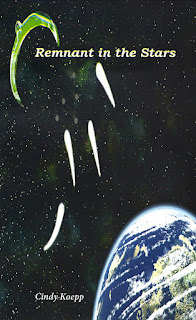
In Remnant in the Stars, Major Kirsten Abbott ends up with a prosthetic forearm after she ejected from her crippled Pulsar light fighter and was hit by debris when it blew up. Unlike the 1974 TV show, Kirsten’s arm doesn’t cooperate with her, and it doesn’t feel like her own arm. Had it worked properly, it would have been a reasonable replacement, allowing her to move and act as if she hadn’t lost her forearm in the battle.
Our current prosthetics aren’t nearly as advanced as Kirsten’s arm, let alone The Six Million Dollar Man, but they’ve advanced beyond three-prong pincers and the like.
One recent innovation is ReWalk. This is similar to some of the powered armor suits being developed by the military, but it’s in no danger of turning someone into Iron Man. The ReWalk exoskeleton helps people with hip, knee, and spinal injuries to walk, climb stairs, and stand. It’s intended to help people with spinal cord injuries walk again.
Unfortunately, ReWalk is heavy, roughly 50 pounds. People using ReWalk need a walker or crutches to keep stable, so users need to have reasonable upper body strength.
Here, check this out to see how it works:
Another similar product is Ekso Bionics’ eLEGs (Exoskeleton Lower Extremity Gait System). It also weighs in at about 45 pounds and requires crutches for stability.
There is a military version called HULC (Human Universal Load Carrier). It does not require crutches to keep the person steady, but then it’s intended, not for paraplegics, but for soldiers to help them carry greater loads in adverse conditions.
Watch this for more details:
Other companies are focusing on prosthetic arms and hands, some of which are very well-articulated.
Advanced Arm Dynamics is one of those companies. They have developed hands that can pick up small things like coins and dice. The one demonstrated in this video can be programmed using a smart phone.
Steeper has BeBionic, an articulated hand that has 14 grip patterns. Me? I didn’t realize there were 14 ways I could grip something, but the video on the page shows all 14 of them. One I wouldn’t have thought of was the Mouse Grip.
Here’s a video of a gent showing a prosthetic BeBionic forearm.
When I originally wrote Remnant in the Stars, the advances shown in these videos didn’t exist yet. Although the technology available today isn’t nearly what Kirsten has in the tale, I don’t doubt that our science will catch up long before the timeline of the story in few hundred years.
Originally from Michigan, Cindy Koepp has a degree in Wildlife Sciences and teaching certification in Elementary Education from rival universities. After teaching for fourteen years, she pursued a master’s degree in Adult Learning with a specialization in Training and Performance Improvement. Cindy has five published science fiction and fantasy novels, a serial published online, short stories in five anthologies, and a few self-published teacher resource books. When she isn’t reading or writing, Cindy spends time whistling with a crazy African Grey. Cindy is currently working as an optician in Iowa and as an editor with PDMI Publishing and Barking Rain Press.
I picked up this book because I'd heard several of the stories on CreepsMcPasta, and they stood out from the other creepypasta I'd listened to. The stories were disturbing and didn't rely on gore to generate fear. They relied on the listener's imagination. In this collection, the author has expanded on his original narratives and added some more material to bring the overall story arc to a conclusion. Expanding the previous stories wasn't a good idea; it consisted of adding meaningless text that turned a group of slightly rambling childhood tales into ones that wandered too far afield. Execution can be learned with practice, though; I still wanted to see where the author took things. The emotional impact these stories have stem from reading the child's view of the incidents that happen to him, his friends, and his pet, but filtering them through an adult perspective. The childhood the unnamed character has the sort of details you would see in any child's life, at least one of an earlier generation. Today's parents wouldn't let their children wander as far afield as our young hero, but I remember having those freedoms myself... perhaps that's why this story worked for me. The kid could have easily been a child of the 1970s or 80s, which the use of Polaroids seemed to imply. The type of phones he and his friends used as teenagers, though, would be a little ahead of their time in that case. So, we have a collection of stalkerish memories, presented in nonchronological order, with important details left out. Very much like memories in real life. Even with the big reveal at the end, there are still questions the reader, and the character, have. But it works; the reader is left with disturbing emotions. Perhaps it works because the details are missing, and, once again, it is up to the reader's imagination to fill them in.
Finders Keepers, the second book in King’s Bill Hodges trilogy, was nominally the sequel to Mr. Mercedes. Certainly it is the sequel in the Bill Hodges timeline. End of Watch, however, is the true sequel to Mr. Mercedes, and the ending of Bill’s story.
End of Watch reunites the Mr. Mercedes team – Bill Hodges, retired cop, Holly Gibney, computer whiz with OCD, and Jerome Robinson, high school student now attending college – against Brady Hartsfield, the man who brought them together. The first book of the series was a straight-up thriller; this book travels firmly into the author’s home territory. Our pal Brady received brain damage at the end of the first novel that should have put him in nursing care for life, but a neurologist decides that he wants to try an experimental treatment on the hush-hush with the crippled spree killer. Now Brady’s body is still a wreck, but he has new psychic abilities. They let him drive people to suicide, and he relishes it.
Bill and Holly are still running their "not-a-detective-agency" detective agency, and Bill is called to consult on one of the suicide cases because of its ties to the Mr. Mercedes case. He quickly scents Brady's involvement, because he has always believed that Brady was faking mental incapacity. He pursues his suspicion aggressively, but Bill has a problem: he's dying of cancer. During his pursuit, he uses increasingly ineffective pain pills to keep going, and he lies to Holly about his health. Naturally, she is too smart and learns the truth, but she can either help him stop Brady or walk away. Jerome joins them when his sister nearly dies by Brady's mental pushing. The trio are pushed to their limits as they chase a man who can kill without touching, and flee from body to body.
King handles the action with his usual skill, but his gift has always been in characterization. His heroes read like real people, from their frailties to their taste in food, and they age and face new issues as King does. He's also begun to add new viewpoints from characters who are not like himself. In the first novel, Holly Gibney starts as a meek and neurotic woman still under her mother's thumb. She becomes integral in solving the Mr. Mercedes case and is the one who physically brings Brady down. In End of Watch, she still has her nervous tics, but she has pushed through them to run a successful business with Bill. She is a full partner in the investigation, and King tells the story sometimes from her viewpoint. At the end of the third novel, we see that with or without Bill, Holly is strong enough to make her way.
This has been a very quiet year for us in terms of announcements about the books we've published or stories we've written. We've been dealing with home repairs (free air conditioning should be a constitutional right in Florida), getting involved with our new Sisters in Crime chapter, and facing our first official hurricane in the Sunshine State. You can assume from this post that we survived Hermine. It was odd, though, to get time off for bad weather in the summer.
Oh, and we had a vacation. A real vacation, the first in several years that was longer than a three-day weekend. Gwen cooked many lovely things, we swam daily, and we also got to read for pleasure, something that we don't get to do as often as we'd like.
During this quiet summer, though, after the release of Strangely Funny III, Gwen and I were very busy, but not so you'd notice on our business page. We were finishing our first novel together. You're probably wondering how we accomplished that: she's a plotter who writes very serious, often dark, mysteries set in the 1870s; I'm a snarker with a short attention span, and most of my stories are set in the present day. I think you'll like our compromise: a mystery set during the 1920s Florida land boom. It has poison, car chases, mobsters, and some serious hangovers. Oh, and one Gertrude Stein book.
Murder on the Mullet Express will be coming out in early 2017.
 A Necessary Evil by Abir Mukherjee