Tuesday, June 01, 2021

Personal Archetypes, 30+ Years Later


Public Domain, Link

Something you may not know about me is that I have a side interest in personal mythology. It goes way back, as in at least thirty years... probably more, since I was interested the moment I heard the term. I say thirty, though, because that's when I took an archetype quiz from Awakening the Heroes Within.

At that time, my strongest trait was Seeker. Some of the archetypes are set at specific ages, most notably Innocent and Orphan, the childlike archetypes.

When I first took the quiz, I was Orphan --> Seeker, with an undercurrent of Caregiver. I know that last is hard to believe, but the alternatives were Lover and Warrior.

Recently, I've been listening to K.M. Weiland's series on using character archetypes in writing. She refers to Pearson's work frequently, and I dug my copy out. I got it in 1991, and now it is 2021. I retook the test, with some surprises.

Still an Orphan - duh. I'm a pessimist who had bad experiences with other kids. Still strong with the Seeker archetype, but Caregiver dropped into the basement.

My strongest archetype now is the Destroyer. This the one where the Heroine confronts Death and must resolve her emotions towards Death. It's also an archetype that appears when a person has suffered great loss. Gave up job and house to move in with dying parent - check. Driven out later by other parent, check. Downsized, check. Bitter AF, double check. Okay, I'm a Destroyer. Where are my superpowers, other than overwhelming bitterness?

The book advises I think about my own death as an exercise. I spoke to my spouse about it, but she asked me to please not do that during our anniversary visit to Daytona. That's what I get for bringing a book to the car.

Other archetypes are also developing, though: the Creator, the Magician, and the Sage, now of equal rank to the Seeker. The Sage is similar to the Seeker in many ways, but has traveled further down the path. I hope this means that the Destroyer phase will end. If I can't smite my enemies into oblivion, what good is it?

Monday, May 17, 2021

Patricia Josephine: The Challenge of Writing Short Fiction

Patricia Josephine is a writer of Urban Fantasy and Sci-Fi Romance books. She actually never set out to become a writer, and in fact, she was more interested in art and band in high school and college. Her dreams were of becoming an artist like Picasso. On a whim, she wrote down a story bouncing in her head for fun. That was the start of her writing journey, and she hasn't regretted a moment. When she's not writing, she's watching Doctor Who or reading about serial killers. She's an avid knitter. One can never have too much yarn. She writes Young Adult Paranormal, Science Fiction, and Fantasy under the name Patricia Lynne.

Patricia lives with her husband in Michigan, hopes one day to have what will resemble a small petting zoo, and has a fondness for dying her hair the colors of the rainbow. 

You may think writing a 200-word story isn’t that challenging, but it couldn’t be farther from the truth. Some writers may actually say it’s harder than writing a full-length novel, and I know a few who don’t write shorter fiction because they can’t wrap their brains around it. Their muse only works in long form.

Writing short fiction is different from a novel. With novels, you have an unlimited number of words you can use to paint a picture for the reader. Short fiction you have restrictions on word count. You may only have 1000 words. You can even have as little as 50. When you have that limit, you are forced to choose more carefully. Your strokes have to be broader instead of going into minute details as you can with a novel.

The way I approach short fiction is similar to my novels. I just start writing. I figure out the story as I go and when I get to the end, I edit. I edit until the story is at the word limit I’ve imposed. That’s done by cutting descriptive words. The sentence doesn’t need the color of someone’s shirt for example. Thoughts the character has might get axed as well. If it doesn’t serve the basic story I want to tell, it can go.

Sometimes that doesn’t always work. Sometimes the story I’m trying to tell needs to be longer. When that happens, I stop worrying about word count and let it end as a novella or novel. I have a zombie apocalypse story I hope to release in the future that I initially intended to be 100 words. It ended at over 10,000!

Writing short fiction is a great exercise. It makes you think about word choices and their importance to the story. I encourage anyone who enjoys writing to give it a shot.


Magic.
Myths.
Fantasy.

We are bewitched by what we can't see.

Conjure delight with a fantastical collection of tales. Each story is told in exactly 200 words and designed to delight your imagination no matter how busy your day is.

Will you believe? 


Thursday, February 04, 2021

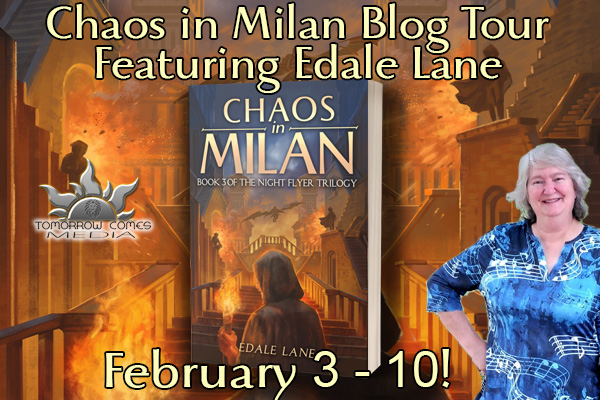
Guest Post: It's Just Romance, by Edale Lane


About the author:
Edale Lane is the author of an award winning 2019 debut novel, Heart of Sherwood. She is the alter-ego of author Melodie Romeo, (Vlad: a Novel, Terror in Time, and others) who founded Past and Prologue Press. Both identities are qualified to write historical fiction by virtue of an MA in History and 24 years spent as a teacher, along with skill and dedication in regard to research. She is a successful author who also currently drives a tractor-trailer across the United States. A native of Vicksburg, MS, Edale (or Melodie as the case may be) is also a musician who loves animals, gardening, and nature. 

Please visit her website at:    https://pastandprologuepress.lpages.co

Twitter:   @EdaleLane


It’s Just Romance

By Edale Lane

The Night Flyer Trilogy is a blending of drama, action, mystery, and romance creatively splashed on the backdrop of Renaissance Italy. One protagonist is an inventor’s child and student of Leonardo da Vinci who has a secret identity as the masked vigilante known as the Night Flyer, because of a set of glider wings granting the power of flight; the love interest is a young widow, mother of two, whose brother is one of the richest merchants in Milan. Both of them are women. One of my beta readers gave me an interesting response: “I’ve never read a lesbian romance before; turns out, it’s just romance.”

I was always taught, “Write what you know.” When one is a woman who loves women, I suppose telling a story about women like me is the natural thing to do. I am also a historian, so that is where my passion lies. One of my philosophies about history is that while styles, governments, religion, culture, and technology have changed drastically through the ages, basic human nature hasn’t. People of the 1500’s had most of the same hopes and dreams, fears and ambitions as we do. They went to their jobs, looked after their families, and wished for something better, be it health, position, wealth, or love. Dangers abounded from much of the same sources as they do today—criminals, war, bankruptcy, wild animals, natural disasters, and social ostracism. Maybe they didn’t worry about car wrecks, but being run down by a panicked horse or injured in a carriage accident were genuine possibilities. Some people were religious, others not so much, and social functions were just as important in the caveman’s life as they are in ours. We aren’t that different from the characters in Chaos in Milan—we just have computers and cell phones. And just like modern times, as long as there have been people, there have been women who loved other women, and men who loved other men. Like today, they were the minority, and history has ebbed and flowed with the acceptance of and opposition to these relationships, just as there were matriarchal societies in the past in addition to patriarchies. There is nothing new under the sun.

I know Madelena and Florentina because they are me. I became a widow at a young age with two small children just like Maddie did. I, too, had always been attracted to girls but felt compelled to fill my “proper role” and meet everyone’s expectations. Like Maddie, I had a good husband and loved my children more than anything in all the world, but upon becoming a widow was faced with a decision: do I continue to live the life others have planned for me, or do I now get to choose to be who I really am? Florentina loves learning, music, art, nature, and has a thirst to constantly expand, improve, and experience more of life. She is creative, resourceful, and fearless; she also hides behind a mask, keeping her true identity secret. I am also Florentina. Her day job is as a children’s tutor; I was a teacher for twenty-four years. I had a secret identity for most of my life, because when and where I grew up, you simply weren’t gay. I could have lost my job, been kicked out of my church, or ostracized by family and friends if anyone ever found out. Truly, I was a phenomenal actress hiding behind a mask of normality. Thankfully, those of you today who read my books live in a different, more accepting world. 

What really sets a lesbian romance apart from a “regular” romance? Two people meet: maybe they are attracted to each other right away or the total opposite, but at some point in the story they realize how they feel. There is excitement, but also insecurity. What if he or she doesn’t feel the same way? Do I risk losing a friendship to possibly gain something more? There are obstacles to overcome, and with the Night Flyer Trilogy life and death situations to get through and mysteries to solve. The only thing that sets these books apart is that the love develops between two women; that is also the only thing that sets me apart from my straight friends. We like the same movies, laugh at the same jokes, attend the same churches, and listen to the same music. We all love our pets and our families; I just have a wife instead of a husband, and even that isn’t so different because it’s just as hard for me to get her to put her dirty clothes in the hamper instead of on the floor as it was to get my male husband to pick up his!

Edale Lane novels are historical fantasy lesbian romances with action and intrigue thrown in to boot, but they are not erotica. The reader will never be shocked with detailed love-making scenes or explicit language, however there will be fight scenes and even epic battles. Chaos in Milan features two strong women, each with a unique skill set, who work together to secure their own happiness, safety, and that of those around them. There are also several important subplots that carry throughout the series, including Antonio’s star-crossed romance with the daughter of a family rival and villain of book one, Don Benetto, who subsequently sets out on a road to redemption. Who is behind the assassination attempts? What clues can our heroes uncover in the Chaos Manifesto? What new weapon will the Night Flyer invent this time? How can a wealthy widow and a hired tutor from different classes but the same gender ever realize their desire of making a life together? Find out in Chaos in Milan!

Kindle Version: https://www.amazon.com/Chaos-Milan-Three-Night-Trilogy-ebook/dp/B08Q7H6DFX/

Amazon Print Version:  https://www.amazon.com/Chaos-Milan-Three-Night-Trilogy/dp/B08PXK13B3/

Barnes and Noble Link: https://www.barnesandnoble.com/w/merchants-of-milan-edale-lane/1136051210?ean=9781654780197


One woman stands between chaos and order – the Night Flyer.

When chaos strikes at the heart of Milan, it is up to Florentina’s alter-ego the Night Flyer to stop it. As Florentina and Madelena’s love deepens, so does the well of danger surrounding them. The race is on to discover the mysterious Shadow Guild and uncover who is behind the deadly rampage, but Florentina’s mission is threatened by a gang of assassins. Can the Night Flyer prevail, or will Maddie’s love be ripped from her arms?

Chaos in Milan is the third book in Edale Lane’s Night Flyer Trilogy, a tale of power, passion, and payback in Renaissance Italy. If you like action and suspense, rich historical background, three-dimensional characters, and a sweet romance, then you’ll want to complete the Night Flyer saga.


Tour Schedule and Activities

2/3 The Literary Underworld http://www.literaryunderworld.com

2/3 Jazzy Book Reviews https://bookreviewsbyjasmine.blogspot.com/

2/4 The Sinister Scribblings of Sarah E Glenn http://saraheglenn.blogspot.com/

2/5 Kim Smith, Author http://Kimsmithauthor.com/weblog

2/5 Oohana Children's Church http://www.oohanacc.wordpress.com

2/6 Horror Tree https://www.horrortree.com

2/7 The Seventh Star Blog http://www.theseventhstarblog.com

2/8 Jorie Loves A Story http://www.jorielovesastory.com

2/9 Afshan Hashmi https://afshanhashmi.com/books-coming-to-me-from-book-tour-hosts-for-my-analysis

2/10 Sapphyria's Books https://saphsbooks.blogspot.com/


Saturday, October 03, 2020

Believable, But Is It Believed?

It's sad when something very logical and even expected happens, but no one believes it. The news is shrieking it everywhere: Donald Trump has the coronavirus. And this makes sense: he refused to wear masks, he has been hosting rallies, include the one in Tulsa where Herman Cain may have caught the virus, and overall showed a general disregard for caution, berating people who wear masks. He even pressured the federal agencies that are supposed to protect the public health: the CDC has made several announcements and recommendations they then had to walk back, so we no longer know if we're getting good information or not. 

It is logical that someone who meets many people and doesn't follow precautions might catch the coronavirus. Many of the people recently in contact with Trump have tested positive. Unfortunately, some people are suggesting that Trump doesn't have the virus at all; that it is a publicity stunt. Michael Moore is one of the most visible proponents of the theory, but Twitter users were exploring the idea within hours of the announcement.

Moore: "He’s an evil genius and I raise the possibility of him lying about having Covid-19 to prepare us and counteract his game. He knows being sick tends to gain one sympathy. He’s not above weaponizing this."

From Twitter: 


Why would he do this? The motivations are many: if he's sick, he can explain away his behavior at the first presidential debate, which was succinctly described by many as a "shitshow". If he's sick, no one can question him about the disastrous business history his recently released tax statements have revealed. If he's sick, no one can question his direct statement on television to the Proud Boys ("Stand by"), which implies that he has future orders for this far-right group with a violent history

The press smells blood in the water, and Trump is unlikely to say anything that would help his campaign at the moment. Being sick gets him sympathy. It also gives him a chance to redeem himself by claiming that he "learned his lesson" in the future.

Trump's physician claims that he is doing very well, but other sources have painted a more concerning picture. Whom do we believe?
Vox.com: We’re well aware that Trump has a disease that is particularly deadly for older, overweight men, but we have no reason to trust anything the White House says about the state of his health. What happens if Trump is truly incapacitated, or worse? Who will we trust to relay that information?

Whom, indeed? When someone has told so many falsehoods, it is hard to believe them now. Even when the truth would be perfectly believable.

Wednesday, May 13, 2020

Review: Upload, Season One

Like many people these days, I'm binging shows on Netflix and Amazon. Unlike most people, this has little to do with the Coronavirus lockdown, and more to do with inheriting a smart TV from my sister-in-law. I'm finally getting to see things like El Camino and Jessica Jones, plus a ridiculous number of superhero shows.
When I saw the ads for Upload, I knew I had to watch at least the first episode. The premise: if you have the money, you can have your mind uploaded to an Internet Heaven when you die. I used to spend a lot of spare time in Second Life, and I was getting that vibe from the ads. It was a great idea, and it was up to Greg Daniels to either succeed with it or screw up. 
The show did not disappoint me. Upload is a lot of fun, and I plowed through the season in a matter of days. The longest episode was the first, where the main characters and Lake View (a very tony Internet Heaven) are introduced, and it only lasts forty-five minutes. The rest of the episodes are about twenty-four minutes each. Bing, bing, bing!
Nathan Brown is a computer programmer engaged to Ingrid, a very wealthy and self-absorbed girl. When Nathan is seriously injured in an accident with his self-driving car, Ingrid pushes for him to become an upload to Lake View, where her family plans to spend their afterlives. Nathan accepts.
Lake View is visually based off the grand hotels of the early twentieth century, with virtual bellhops and large rooms where the dead meet and make new friends. The exterior shots taken for the place are from the Mohonk Mountain House, which I'm adding to the list of hotels I'd like to stay in (the Chateau Frontenac and the Grove Park Inn are on the same list). 
Every resident of Lake View has an Angel, someone available 24-7 to answer questions and serve the needs of the well-heeled residents. Nathan's Angel is named Nora, and it's hard not to like her. She and the other Angels work cheek to jowl in a large room with rows of computer screens, and they aren't paid very well. Nora's father is dying of vape lung, and she wants to borrow enough money to get him into Lake View. Unfortunately, Nora's ratings aren't high enough at work (or in the bedroom, which is another story) and her boss is a petty bitch. Her father also wants to go to 'regular' Heaven to be with her mother, which means when he's gone, he's gone. Nora's emotions bleed over into her job, and Nathan, hungry for real interaction, is supportive. She begins to bond with him.
Meanwhile, Nathan has his own problems. Since Ingrid is paying for everything, his existence is dependent on her happiness and whims. She dresses him in kneepants for his own funeral (perhaps she likes calves?) and considers 'pausing' him when she's too busy with other things. He also has some damaged and missing memories, which isn't supposed to happen with the elite service Ingrid is paying for.
Nathan begins puzzling about it, sharing his concerns with the other uploads. I goggled when they introduced his neighbor across the hall - William B. Davis, best known for playing the Cigarette Smoking Man on the X-Files. The character, David Choak (Koch backwards, I presume), is fabulously wealthy and takes an interest in Nathan. He doesn't believe Nathan died in a freak accident; he believes Nathan was murdered. And if CSM says that, you can take it to the bank.
Nora joins Nathan in his quest for the missing memories, risking her approval ratings and even her job. Before the end of the first season, she's also risking her life.
Upload is a great dystopian sci-fi comedy, with hilarious situations and a handle on cultural developments down the road. One of Nathan's new friends is a kid who's been dead for at least a decade, but is still stuck in a child avatar. They sneak off to the virtual black market and the kid buys a puberty upgrade - which doesn't work out the way he planned. When Nora's dad takes a tour of Lake View, technical problems turn Nathan and the horses they're riding on into block figures. Corporate branding is everywhere, including on the leaves of the trees. Pop-up ads appear regularly in public rooms and paths, just like they do on Second Life. Angels promote virtual products, and receive bonuses if their clients buy.  And everyone is given rating stars for their performance in everything, including the bedroom.
I recommend watching the show. It's full of entertainment and a lot faster than reading this review.

Tuesday, April 28, 2020

Old Spice Strikes Again!

Circa ten years ago, I wrote a post about two young men who consumed a large amount of nutmeg in pursuit of a legal high. Chubbyemu, one of my favorite YouTubers, presents a more recent case of a fellow who took it even further:

Tuesday, December 31, 2019

Fill Your Kindle Promotion!

Gwen and I are participating in a group giveaway/free on Kindle Unlimited promotion this week. Check it out for our new book, plus a bunch from other indie authors!


Win up to 35+ eBooks!

(2) Grand Prize "Gift Baskets" of ALL eBooks!
(35+) Winners of Individual eBooks (randomly selected titles)

 Authors XP event

Friday, December 06, 2019

Book Review: Pines by Blake Crouch

Pines (Wayward Pines, #1)Pines by Blake Crouch
My rating: 4 of 5 stars

I picked this book up on a recommendation from Crimereads, and was swept up immediately.
I didn't know the genre, didn't know that it was the first of a series, or that it was even on television. The novel begins with a basic thriller lure - Secret Service agent comes to small town in search of missing agents - and plunges deep into dystopia by the end. Ethan Burke, the aforementioned agent, has been injured in a car accident and doesn't even know who he is at the beginning of the book. His memory begins to come back, but he doesn't remember the investigation's details or what he discovered before waking up on the streets of Wayward Pines. I'm a sucker for an amnesiac hero (see Nine Princes in Amber by Roger Zelazny), or a hero who no longer has vital information he needs (also see The Face of a Stranger from Anne Perry), so I ate this up. I also plowed through the book in one evening, because this tale demands commitment.
The town appears, at first, to be cookie-cutter Suburbia with an unhelpful sheriff. There's also the unhelpful hospital, and the unhelpful new receptionist at Ethan's home office who never seems to pass Ethan's urgent telephone messages on to his superior. It goes downhill from there, and soon our hero is on the run, ducking the law and the local angry villagers--er, residents--who throw parties when they're eliminating outliers. The only friendly person he meets is Beverly, a woman who came to Wayward Pines in 1985--and appears not to have aged.
This is not a novel of pretty words; it's one of action. The reader never rests. Ethan is always running, hiding from the residents of Stepford North, or, later, climbing up cliffs. I followed him, leaping from mental crag to mental crag. It's also in Sensesurround: because he's injured, only partially clothed at times, and has no money, he's cold and constantly hungry. I live in Florida, and had to put my slippers on for protection from the imaginary elements. It's a good read, and when you get to the reveal, you will either be excited or disappointed. I was intrigued. I'm not sure I would try the TV series; I already have some very clear mental pictures of the place and the characters. Other books in the series, however, are a definite possibility.

View all my reviews

Wednesday, November 20, 2019

Voter Base

Voter Base: When mayor Gene Arnot runs for the state senate, his in-laws literally come out of the swamp to object. His political fate--and life--depend on a different type of stump speech. A bit of Lovecraftian dark humor, free on Kindle Unlimited.

This short story originally appeared in State of Horror: Louisiana. The first part of Gene’s dilemma languished in my computer for several years before the rest of it came to me. Stephen King, in Bazaar of Bad Dreams, referred to a similar situation as having the cup but waiting for the handle to come along; when I returned to it after some time as a political volunteer, I had my handle.


Wednesday, September 11, 2019

Unhappy Anniversaries

Everyone knows about 9/11/01. Everyone wants to remind us of 9/11/12 today, too, although they seem more interested in talking about Hillary Clinton than honoring the dead.

9/11/12 is also the day my father died. Here we are in Homosassa, Florida. My father liked this restaurant because he could watch the water and the cavorting monkeys on the little island nearby. There were so many little pleasures he found in life.

Seven years later, I'm waiting for the other shoe to drop--my mother's health is fading. I think a lot about death and dying these days. Despite his overflowing optimism, Dad had these thoughts, too. Starting in the 1990s, he mailed 'Open in the Event of My Death' envelopes to me, which he periodically updated. During his final illness, he had me open the most recent one so we could review the contents. He'd provided a list of people to notify, actions to take, and a personal message to the church congregation, which I read aloud at the memorial.

How I wish I had another envelope to prepare me now.

Wednesday, August 21, 2019

Interview: Michael Williams, Author of Trajan's Arch

Over the past 25 years, Michael Williams has written a number of strange novels, from the early Weasel’s Luck and Galen Beknighted in the best-selling Dragonlance series to the more recent lyrical and experimental Arcady, singled out for praise by Locus and Asimov’s magazines. In Trajan’s Arch, his eleventh novel, stories fold into stories and a boy grows up with ghostly mentors, and the recently published Vine mingles Greek tragedy and urban legend, as a local dramatic production in a small city goes humorously, then horrifically, awry.
Trajan’s Arch and Vine are two of the books in Williams’s highly anticipated City Quartet, to be joined in 2018 by Dominic’s Ghosts and Tattered Men.
Williams was born in Louisville, Kentucky, and spent much of his childhood in the south central part of the state, the red-dirt gothic home of Appalachian foothills and stories of Confederate guerrillas. Through good luck and a roundabout journey he made his way through through New England, New York, Wisconsin, Britain and Ireland, and ended up less than thirty miles from where he began. He has a Ph.D. in Humanities, and teaches at the University of Louisville, where he focuses on the he Modern Fantastic in fiction and film. He is married, and has two grown sons.

What made you decide to start writing your own stories?
I think most every kid is in love with hearing and telling stories.  It's hard-wired in how we understand things and how we learn.  The big transition for a few people, though, comes at the moment when they say to themselves that they'd like to make storytelling a lifelong pursuit.
For me, that happened at 13 or 14 when I read Tolkien's Lord of the Rings for the first time. In chapter 3 of The Fellowship, there is a moment when the hobbits get off the road at the approach of someone—someone who turns out to be one of the Dark Riders of Mordor, who attempts to sniff out (literally) our heroes in the undergrowth.  I remember lifting my eyes from the page and realizing I had been immersed in Tolkien's world—completely there—for almost half an hour.  From that experience and a number that followed, I decided that creating that effect was something I wanted to do forever.

Which authors influenced your writing?
Obviously Tolkien, when it came to world-building and the use of myth and legend to inform and underlie the way my stories worked.  Several of the great magical realist writers—Garcia Marquez and Borges come to mine—for the way they wed the everyday with the wondrous.  My old mentor John Gardner (author of Grendel and The Sunlight Dialogues) taught me invaluable things, and there are half a dozen or so poets (among them Yeats, Dylan Thomas, and Ted Hughes) who were very formative for me around the time I really became serious about writing.

I'm a bit of a tyro in the humanities. What is the Modern Fantastic?
I'm thinking this question stems from your reading that I teach courses in the Modern Fantastic at the University of Louisville.
It's pretty much what it sounds like: fantastic fiction, film, and art from the middle of the 19th century to the present day.  The late 19th century, for me, is that time in history when we began to look at fantastic worlds as mental or psychological landscape, when these stories help establish the theory and vocabulary of thinkers like Freud and Jung.  Just think “fantasy from the 1880s to the present.”

Tell us about the City Quartet. Which cities are involved, and can you tell us a little about each story?
One city—Louisville, Kentucky, in both an historical and an imagined version.  These are four novels (you can enter the world of the books through any one of them—there's no designated reading order, no idea of linear “sequence” or “series”).  The stories of the books interweave, so that a principal scene in one novel might be glimpsed in passing in another, a principal character in one might make a cameo appearance in another.  In short, the books speak to the connections that bind us all in location and in history, and one of their major areas of meaning is in how our lives intertwine, how we depend and rely on each other.

  • Trajan's Arch: Gabriel Rackett stands at the threshold of middle age. He lives north of Chicago and teaches at a small community college. He has written one novel and has no prospects of writing another, his powers stagnated by drink and loss. Into his possession comes a manuscript, written by a childhood friend and neighbor, which ignites his memory and takes him back to his mysterious mentor and the ghosts that haunted his own coming of age. Now, at the ebb of his resources, Gabriel returns to his old haunts through a series of fantastic stories spilling dangerously off the page–tales that will preoccupy and pursue him back to their dark and secret sources. 
  • Vine: An Urban Legend: Amateur theatre director Stephen Thorne plots a sensational production of a Greek tragedy in order to ruffle feathers in the small city where he lives. Accompanied by an eccentric and fly-by-night cast and crew, he prepares for opening night, unaware that as he unleashes the play, he has drawn the attention of ancient and powerful forces.
  • Dominic's Ghosts: A mythic novel set in the contemporary Midwest. Returning to the home town of his missing father on a search for his own origins, Dominic Rackett is swept up in a murky conspiracy involving a suspicious scholar, a Himalayan legend, and subliminal clues from a silent film festival. As those around him fall prey to rising fear and shrill fanaticism, he follows the branching trails of cinema monsters and figures from a very real past, as phantoms invade the streets of his once-familiar city and one of them, glimpsed in distorted shadows of alleys and urban parks, begins to look uncannily familiar.
  • Tattered Men (to be released in September: When a body washes ashore downstream from the city, the discovery saddens the small neighborhood south of Broadway.  A homeless man, T. Tommy Briscoe,  whose life had intertwined with a bookstore, a bar, and the city’s outdoor theater had touched many lives at an angle.  One was that of Mickey Walsh, a fly-by-night academic and historian, who becomes fascinated with the circumstances surrounding the drowning. From the beginning there seems to be foul play regarding Briscoe’s death, and, goaded on by his own curiosity and the urging of two old friends, Walsh begins to examine the case when the police give it up.  His journey will take him into the long biography of a man who might have turned out otherwise and glorious, but instead fell into and through the underside of history, finding harsh magic and an even harsher world.  Despite the story of Tommy’s sad and shortened life, Walsh begins to discover curious patterns, ancient and mythic, in its events—patterns that lead him to secrets surrounding the life and death of Tommy Briscoe, and reveal his own mysteries in the searching. 

How did you get from a triumphal arch in Italy to modern-day Louisville?
Sheer imagination, metaphorically and literally. The triumphal arch is present  only in an article Gabriel reads during his initial fascination and curiosity with Trajan. The real “arch” is the series of stories Trajan Bell has written, inserted in the novel and over-arched, you might say, by the novel itself.  There's another arch late in the book, but to say much more would be letting spoilers slip.

Is there a new author or book out there that you think we should be reading, and why?
I'm interested right now in more “world fiction”--magical realist stories from outside the Anglo-American world (and, for that matter, non-European writing).  Two women writers, strikingly different from each other, I've been reading with some pleasure.
Karen Lord is a writer from Barbados, with roots in Senegal.  Her Redemption in Indigo is a darkly funny mythic journey, a retelling of the folktales centering on the West African legendary figures of Anansi the Spider and Ansige Karamba the Glutton.
Lesley Nneka Arimah is a Nigerian writer who mingles magical realism and speculative fiction with the very realistic treatments of the harsh political realities in her native country. Her What It Means When a Man Falls From the Sky is a stunning collection of short fiction.
Recommending the work of both these writers is my gift to you, my thanks for giving me space to talk about my own work.

Many thanks! Trajan's Arch is now available from Amazon and Barnes and Noble.


Friday, August 02, 2019

August

Ah, August. A time when my email boxes overflow... Strangely Funny submissions are pouring into the MAHLLC coffers, and my personal email has become a FEMA flood zone of politicians pleading for money. Volunteering is the gift that keeps on giving...
An update on the past few months:

  • I began temping in a call center in April, mere days after posting how discouraged I felt. In July, the center hired me away from Randstad. I'm happy to be wanted, but I can't figure out why. My father was a great salesman of school textbooks, and all I picked up was a love of reading. This belligerent introvert is learning new skills.
  • My ebullient sister-in-law is moving to Tampa Bay in the next few weeks. It will be good to have more family here, and I may develop a social life despite myself.
  • Gwen and I have finished Murder at the Million Dollar Pier, the sequel to Murder on the Mullet Express. It's the second book in the Three Snowbirds series, and we'll be doing a cover reveal in the near future.

I'm glad that my life is coming back together. We'll see what these changes bring.

Sunday, May 05, 2019

The Other Surprise Derby Winner

My S-I-L made a lovely hat for the Derby Party!
Yesterday's Derby was a major surprise. For the first time in Derby history, a winner was disqualified due to infractions during the race. Country House became the official winner after Maximum Security had already done a victory lap.

We no longer live in Kentucky, but we did go to the Derby Party thrown in our mobile home park. My sister-in-law is visiting, and she threw together a lovely hat at short notice.

While the television announcers talked about past Derbies, gave the changing odds on favorites in the current race, and interviewed trainers and jockeys, our group staged races with stick horses. There was betting going on with these races, too, but no one was going to win or lose big at a quarter per ticket.

We placed a wager at my table on the Big Race. Since I didn't know anything about the horses running this year, I chose Tacitus. I spent several years as a classics student, so it was a natural for me. Furthermore, it sounded like a real Derby winner name. The first time I was asked to identify Aristides on a test, I replied that he was the winner of the original Kentucky Derby. Oh, and that he was an Athenian statesman.

None of our horses won. However, Tacitus took third place after the judges declared the official winner of the race. Since I was the only one with a horse on the board, I won the pot. It was a pleasant evening with a suprisingly rewarding ending.


Tuesday, April 23, 2019

Review: A Talent for Murder by Andrew Wilson

A Talent for MurderA Talent for Murder by Andrew Wilson
My rating: 5 of 5 stars

This is the first novel in a series starring the author Agatha Christie as the main character. Biographer Andrew Wilson spins several well-researched events of 1926 into a gripping tale of why Agatha Christie disappeared for several days, and what happened during that time. He's not the first person to do so - the movie Agatha springs to mind - but Wilson's version grabbed me from early in the book and wouldn't let go.
The book opens with Agatha's despair. Her husband, Archie (played in the film by the swoonworthy Timothy Dalton) has fallen in love with a younger woman and doesn't understand why his wife isn't being reasonable about giving him a divorce. Wilson must have suffered a broken heart at least once; he describes Agatha's pain in convincing detail. Her misery is interrupted when she is pushed into the path of a train, and then 'saved' by a man who is no hero. Dr. Patrick Kurs has been following her exploits for some time, and he believes she should perform a service for him. In exchange for not releasing love letters between her husband and his mistress, he wants Agatha to kill his wife. He will arrange to be elsewhere, and she can put her knowledge of murder to good use. When she balks at his demands, he threatens to harm her family, specifically her daughter. Convince of his ability to hurt them, she agrees.
Kurs only allows her to decide how to commit the murder; the rest of her actions follow a plan he has already devised. First, Agatha disappears into the countryside, abandoning her car and her fur coat for the police to find. She is allowed to keep her purse, which contains a pouch of poisons. He forces her to check into the Swan Hydropathic Hotel under the last name Neele (the name of Archie's mistress) and, later that evening, to dance the Charleston at his command. These have little to do with the crime he wants her to commit; they are designed to humiliate her and reveal how much she is under his control.
We are occasionally given a glimpse into the police investigation of Agatha's disappearance and a separate investigation by a young woman who is also determined to find her, but never for long. The focus always returns to the mental battle between the fiendish Kurs and Agatha Christie, one of the world's cleverest plotters. He humbles her again and again, but she finds an interesting way to give him what he wants.
This book is very well written and researched. Wilson shows us true details of Agatha Christie's life, and uses what is known about her disappearance as the framework for a powerful conflict between two very clever and determined people. I recommend it.

View all my reviews

Saturday, April 20, 2019

Unemployment and Depression

I'm afraid that the job I accepted in February fell through. I received about three weeks of pay for it, so I did receive some benefit. Around the same time, I came to the end of my severance pay. Since I'd been keeping track of my job applications, the next step was applying for unemployment.

You may have been told that the unemployed are lazy people sitting around collecting money for nothing. I need to tell you two things: 1) I'd rather be working than going to interviews and having my hopes dashed again and again, and 2) I get $275 a week, which might be a lot in some states, but not in the Tampa Bay area. An article in the February 7th edition of the Tampa Bay Times states that the 'survival income' for a family of four is $60K/year. That's $5000 a month, in case you don't want to do the math. The 'survival income' for a single person is a little under $21K.

Gwen and I are a family of two. I am bleeping grateful that she still has a job, because I am alloted a little over $3000 for this year. That's how unemployment works. To qualify for it, I'm supposed to list five places I applied for work during each week. I usually list ten or more. I want out of this arrangement. Next week, I'm doing a workshop on successful interview techniques because I haven't done many, and I'm enough of an introvert to need help with social interactions that involve charm as well as answering questions.

Being rejected again and again is painful. It's especially so when I've taken skill assessments for temp agencies and been told how good my scores are. Sometimes I've been rejected because I lacked 'front office' experience. Other times, I've been advised to leave some of my experience off my resume because of either a) age discrimination or b) I would look too skilled for the jobs I was applying for. Folks, my ambitions are in writing, not in becoming a corporate raider.

This past week, I learned of a new complication: at least one of my previous employers doesn't give references. Instead, they use a service to confirm employment. This service costs money for prospective new employers to use, and I've learned it's not a new practice. I will contact the service to get what free verifications I am entitled to, but now I'm wondering how many jobs I lost because the employer could hire someone whose records they could verify without a charge. Stupid me.

This whole experience has eroded my ideas of who I am and that I have something to offer to the world. I've always been a steady worker; I spent over seven years in my first 'real job' and about fifteen in my second full-time position. I was approaching five years with my last employer when I was laid off. They treated me well in the process and gave me good severance, but I haven't found a place in this Brave New World of Work.

I'm not ready to quit looking for work. But I understand why some people have.

Wednesday, February 27, 2019

Review: Smoke and Ashes, by Abir Mukherjee

Smoke and Ashes (Sam Wyndham, #3)Smoke and Ashes by Abir Mukherjee
My rating: 4 of 5 stars

"The first drag of the first pipe was a deliverance, like the breaking of a fever. With the second pipe, the shaking stopped, and with the third, the nerves steadied."

Sam Wyndham's error was calling for a fourth. Smoke and Ashes spotlights Wyndham's opium addiction in the first scene--and nearly ends his career with the CID at Lal Bazar, when the vice division raids the Calcutta den he's visiting. During his escape from the authorities, Sam discovers a dying man, curiously mutilated. He continues his flight, but begins a low-key investigation into the murder, which mysteriously appears to remain undiscovered as far as the authorities are concerned.

A more pressing matter is on his superiors' minds - the Indian National Congress and its leader, Mahatma Gandhi. The cause of self-rule have swept the country, with protest rallies, labor strikes, and the burning of British textiles. The Prince of Wales is touring India to restore goodwill and the status quo, and he is coming to Calcutta for Christmas. Alas, there will be no carols about it. One of Gandhi's primary supporters, C.R. Das, is leading the non-cooperation movement in the city, and Lord Taggart is sending Sam and his sergeant, "Surrender-not" Banerjee, to persuade him not to stage protests or stunts during the visit.

Sam Wyndham isn't looking forward to the job:

"I hated this new breed of pacifistic Indian revolutionary. So often they acted like we were all just good friends who happened to disagree about something, and that once the issue was resolved - obviously in their favour - we'd go back to taking tea and being the best of chums. It made punching them in the face morally difficult."

Shortly after their first visit to see Das (fruitless, of course), the second body turns up - mutilated like the man from the opium den.

The Das intervention and murder investigation turn the wheels of the plot after that, taking us into an unsavory part of British history in India, until all the elements come together at the climax of the book, shifting what was a mystery into a thriller.

My greatest pleasure in reading Abir Mukherjee, comes from his use of the language, his ability to slide between cultures, and his philosophical view of his subject matter. His commentary through Sam reminds me a bit of John D. MacDonald's writing.

"Calcutta was a city divided in more ways than one. To the north, there was Black Town, home to the native population; to the south, White Town for the British; and in the middle, a grey, amorphous area full of Chinese, Armenians, Jews, Parsees, Anglo-Indians and anyone else who didn't fit in. There was no law demarking the city, no barriers or walls; the segregation was just one of those things that seemed to have evolved when no one was paying attention."

His observations and seamless writing make the entire series a worthwhile read.

View all my reviews

Friday, February 22, 2019

Review: That Old Scoundrel Death

That Old Scoundrel Death: A Dan Rhodes Mystery (Sheriff Dan Rhodes Mysteries)That Old Scoundrel Death: A Dan Rhodes Mystery by Bill Crider
My rating: 4 of 5 stars

Confession: I haven't read a lot of Bill Crider, unlike most of the literate world. So, I'm reviewing his final Dan Rhodes novel as an outsider looking in.

The book opens with Sheriff Rhodes making what he thinks will be a motorist assist, only to discover that he's stepped into a road rage incident. Kenny is not appreciative of 'Cal Stinson's' driving, and is threatening him with a gun. Rhodes, who appears to always be clear-minded under pressure, subdues Kenny and arrests him.
The next time Rhodes sees 'Cal', the young man has been found dead in an abandoned schoolhouse in Thurston. His true name is Lawrence Gates, and he's not local.

The old schoolhouse is the center of community debate at the moment; some people want it torn down, others want it restored. Rhodes must tangle with the families at the center of the conflict, along with all the other problems Blacklin County can muster. The mayor is angry because a local blog has called him a nincompoop, the local buttinsky Seepy Benton has decided to become a private eye, someone is trying to kill Kenny and Noble (for good reason), and Rhodes' cohorts, Hack and Lawton, constantly complain about being left out of "the loop".
His wife Ivy keeps feeding him kale, which he hates, and he must sneak in his donuts and hamburgers while handling his duties. Meanwhile, reporter Jennifer Loam has reminded him that an election is coming up, and Rhodes isn't sure he wants to run again.

Despite these speed bumps, Rhodes continues his investigation into Gates' death. The closer he gets to the truth, the more he realizes that the schoolhouse issue is just the window dressing for the real issue.

What I enjoyed most in this novel were the gentle humor in the author's voice and how very realistic the characters were. I worked at the reports desk for a police department back in the Stone Ages, and Crider's depiction of Kenny Lambert (a miscreant with a snake tattoo on his neck) and Noble Truelove (badly named) reminds me very much of some of the jokers our officers encountered. The witnesses he interviews are also typical Southerners: they take forever to get to the point, and you're going to learn some history along the way.
Rhodes gets into dangerous situations, but they aren't due to macho behavior or idiocy; they're just things he has to do as sheriff. He also resolves them without loud bravado or action hero moves, something else I respect.

"I want to think that my end will be handled the way I'd like it to be handled. It would be a comfort to me to know that."

The above was from a thought-provoking conversation between Clyde the undertaker and Sheriff Dan Rhodes. Bill Crider was open with his cancer diagnosis, and writing what was likely to be his last Rhodes novel.

I couldn't help but notice the enormous cast of characters in this book, and I discovered that many appeared in previous adventures. He also showed us the new people who took over Hod Barrett's grocery store in Thurston. I couldn't help but think that this was a gift to long-term fans - giving everyone a last glimpse at their favorites, and perhaps concluding a few arcs. He, too, was handling the end the way he wanted it to be handled.

In an afterword, Crider thanks many of the people who helped him along the way in his writing career. He also gives his own opinion on whether Rhodes should run for sheriff again, but I'll leave that for you to discover.

I received a free copy of this novel in exchange for an honest review.


View all my reviews

Wednesday, February 20, 2019

Guest Post: Daniel Dark

As a historical mystery writer, I was intrigued by the notion of a hosting Daniel Dark, a Victorian chef, on my blog. I've read a lot of fiction from the era, and it's fairly clear that their daily dishes were quite different from our own. I asked Mr. Dark if he could educate us, and he obliged:

Well, let us take a look at a few of those items, starting with one that I wrote a whole cookbook about.

1) Catsup: I am not offering the thick over sweetened flavored corn syrup that most know about now. In Victorian times, Catsup was made from many things before it became tomato starting with spiced and seasoned fermented fish brine. Later on, the word became associated to any spiced acidified sauce. There were many variations to this according to where the sauce was being made and the available base products. In England you had mushroom, walnut, and fish or oyster catsup in most shops, but you would have been pressed to find banana. In the northeastern coastal areas of America, there would be no lost for supply of lobster catsup or cranberry catsup. (For more info, see Victorian Catsup by Daniel Dark.)

2) Today if I offered you roasted pigeon or blackbird pie with little clawed feet sticking out of it you may think I would be crazy. Now, if I offered you the French delicacy of roasted Squab, you might be more interested. Now, that pie has graduated to a more common dish of a pot pie.
3) In Victorian times no part of an animal came to waste. With all of the government scares, you may be able to find hog jowl or cheek in some groceries, but what about the rest of those delectable parts found in the head such as eye balls or brains that mix so well with eggs?
4) Other parts of animals that were of high regard were feet, bone marrow, and testicles (also known as mountain oysters).
5) Desserts were more common to be savories than sweet. This was normal considering the high cost of sugar, which was at the time a commodity that was kept under lock and key in most houses that could afford it.
6) Now. on the other hand, in the Victorian times lobster was fed to the convicts in prison considered the cockroach of the sea and thought of as inhumane to feed it to them more than three times a week.
7) In Victorian times until the late part refrigeration was almost unheard of, so eating was done seasonal with canning or curing done during certain parts of the year according to when the crops came in.

This is effectively a short list of how things have changed in a short two hundred years. And it could be expanded many times over.

***

Daniel Dark Knife's Tell & Vctorian Catsup Blog Tour!

February 20-27, 2019

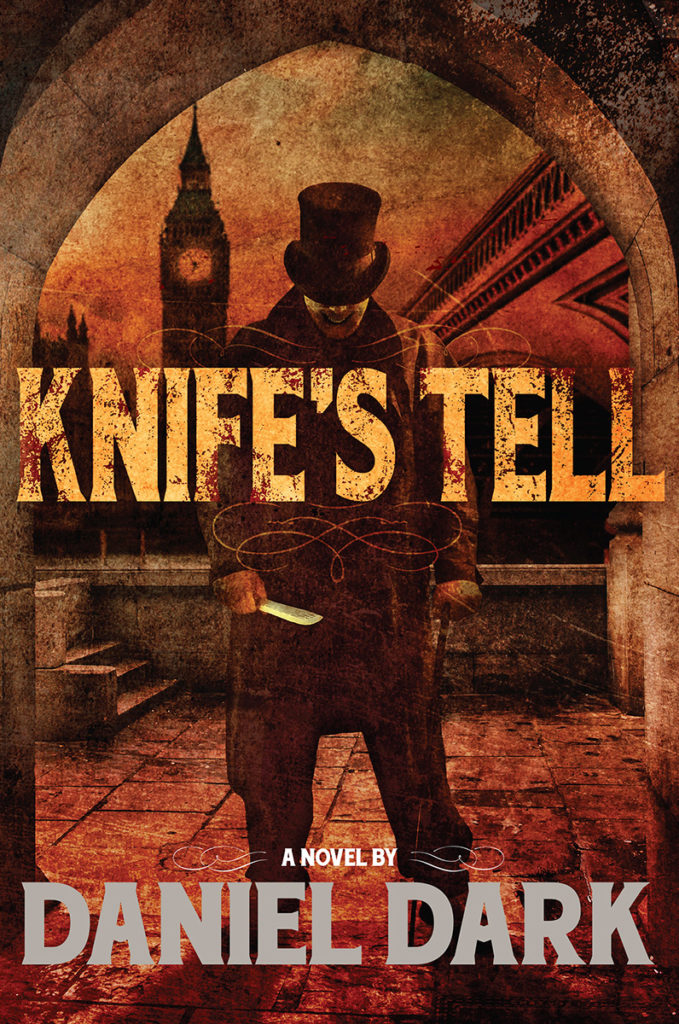
Explore the shadows of Victorian Era London and encounter a new Jack the Ripper tale like you’ve never read before in Daniel Dark’s Knife’s Tell & Victorian Catsup Blog Tour, taking place February 20-27!

Knife’s Tell contains a tantalizing blend of thriller, horror, erotic, and alt. history elements. As an added bonus, author Daniel Dark (a former Victorian chef) also has included the authentic Victorian Era recipes of the dishes that are featured in the story!

In addition to Knife’s Tell, this tour also highlights Victorian Catsup: Receipts of the Past, which features history and recipes for a wide variety of authentic, Victorian Era catsups. The book itself also has a great story behind its development, and it is attached to a wonderful cause!


About the author: Daniel Dark, a native of Nashville, Tennessee, grew up with homicide every day. Having a homicide detective as a father, he was able to learn about those that were brought to justice, and the ones that were not.

Spending many hours in Central police headquarters and in his grandfather’s hematology lab gave Daniel an unusual childhood and a love for science. Along with this, his great uncle owned the oldest book store in Nashville. His parents took him there regularly, where developed a love of reading and found out about history.

Daniel went on to become an Electrical Engineer and Industrial Maintenance Manager till NAFTA took away his job. A year later he went to culinary school and studied Victorian cooking, after which he opened a Victorian-style restaurant.

He became a heart attack and stroke survivor at fifty years old, where he used writing to rehabilitate his brain. The first book written by Daniel was on Victorian Catsup, which had over two hundred catsup recipes in it from the late 1700’s to 1910, with over sixty different flavors. Daniel used the book to start his 1876 Catsup company as Mr. Catsup.

Knife’s Tell represents his debut novel as an author.


Book Synopsis for Knife’s Tell:  
In 1888, one of the most notorious serial killers in history plagued London’s East Side.

Knife’s Tell is not about those murders, but the life behind them. What would cause a normal person to slay in such a horrific way?

Daniel Dark has explored an alternative tale of a doctor lost in reality trying to correct his past. With the help of his personal servant, he searches the Chapel for answers about his connection to the man with the knife.

Where did he come from? And how is the doctor part of his plans for escaping the police at every turn?
Read Knife’s Tell to learn the story behind the blade that killed London.


Book Synopsis for Victorian Catsup- Receipts from the Past: 
The book you now hold in your hands is nothing new, only forgotten by most.

It is, however, how Chef Daniel, the Victorian Chef, recovered many missing segments of his knowledge after having a stroke in 2012. At that time, he had a forty-seat restaurant where he was recreating dishes from the Victorian Era. He was also developing his signature catsups to serve with each receipt that he placed on the menu.

After the stroke, he was forced to give up on his dream for the time being and start the long journey of rehabilitation of both body and mind. When Chef Daniel was able to stand in front of a stove again, he went back to what he knew best, making small batch catsup that he took to local fairs and sold so that he could make more.

This book is a big part of what kept Chef Daniel going each day. Now he wants to share that with others by contributing ninety percent of his proceeds to the Blood Banks that kept him alive by furnishing over twenty units to him when he was in need.


Author Links:

Twitter: @1876Catsup

Facebook: https://www.facebook.com/DanielDarkAuthor/

Tour Schedule and Activities

2/20     The Sinister Scribblings of Sarah E. Glenn      https://saraheglenn.blogspot.com/    Top Ten's List

2/21     Breakeven Books         https://breakevenbooks.com   Guest Post

2/21     I Smell Sheep   http://www.ismellsheep.com/            VLOG

2/22     Horror Tree     https://www.horrortree.com     Guest Post

2/23     Sheila's Guests and Reviews   http://sheiladeeth.blogspot.com        Guest Post

2/24     The Book Lover's Boudoir       https://thebookloversboudoir.wordpress.com/         Review

2/24     Books, Reviews, and More     http://bookworm1977.simplesite.com/435597726   Interview

2/25     Jazzy Book Reviews     https://bookreviewsbyjasmine.blogspot.com/           VLOG

2/26     MyLifeMyBooksMyEscape      http://mylifemybooksmyescape.wordpress.com       Interview

2/27     Honestly Austen          https://honestlyausten.wordpress.com/        Review

2/27     Willow's Thoughts and Book Obsessions       http://wssthoughtsandbookobsessions.blogspot.com/            Review

Amazon Links for Knife’s Tell:

Print Version: https://www.amazon.com/Knifes-Tell-Daniel-Dark/dp/1941706665/

Kindle Version: https://www.amazon.com/Knifes-Tell-Daniel-Dark-ebook/dp/B075RMJ4BJ/

Barnes and Noble Link for Knife’s Tell: https://www.barnesandnoble.com/w/knifes-tell-daniel-dark/1127157436?ean=9781941706664

Amazon Links for Victorian Catsup:

Print Version: https://www.amazon.com/Victorian-Catsup-Receipts-Daniel-Dark/dp/1948042479/

Kindle Version:  https://www.amazon.com/Victorian-Catsup-Receipts-Daniel-Dark-ebook/dp/B07DCFS2RL/

Barnes and Noble Link for Victorian Catsup: https://www.barnesandnoble.com/w/victorian-catsup-daniel-dark/1128827007?ean=9781948042475

ShareThis